


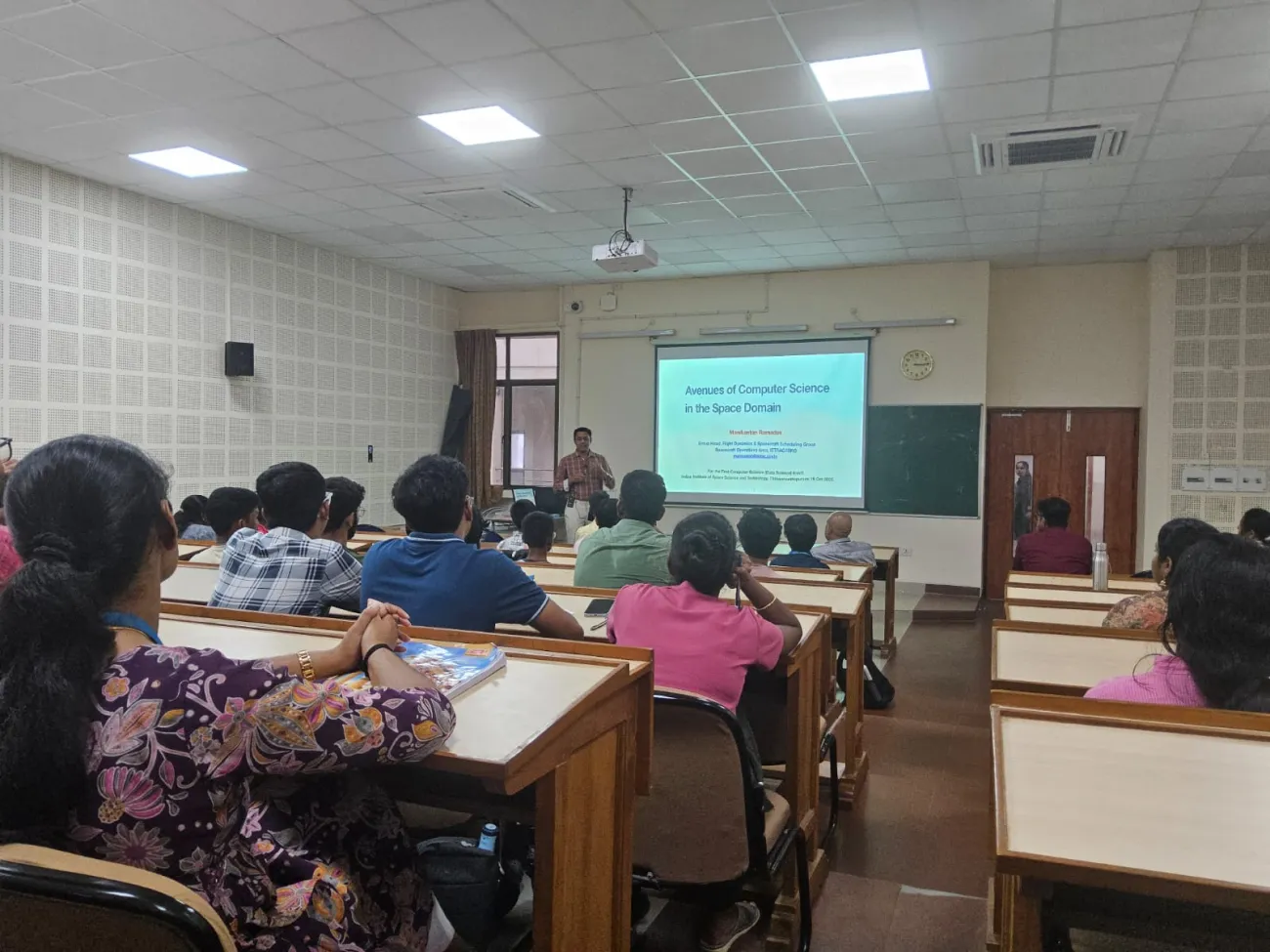
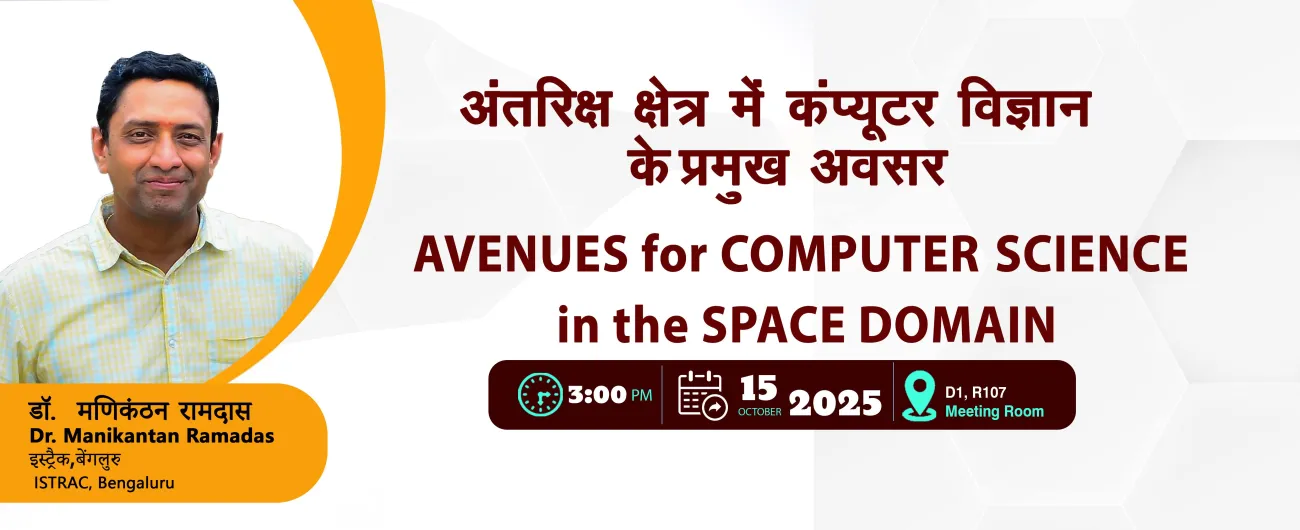
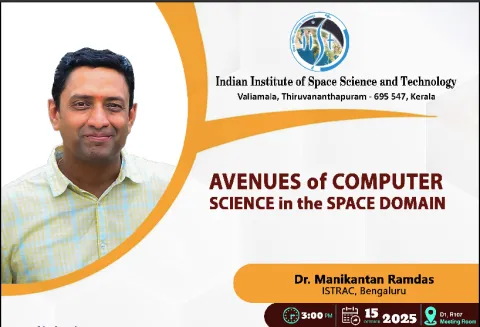
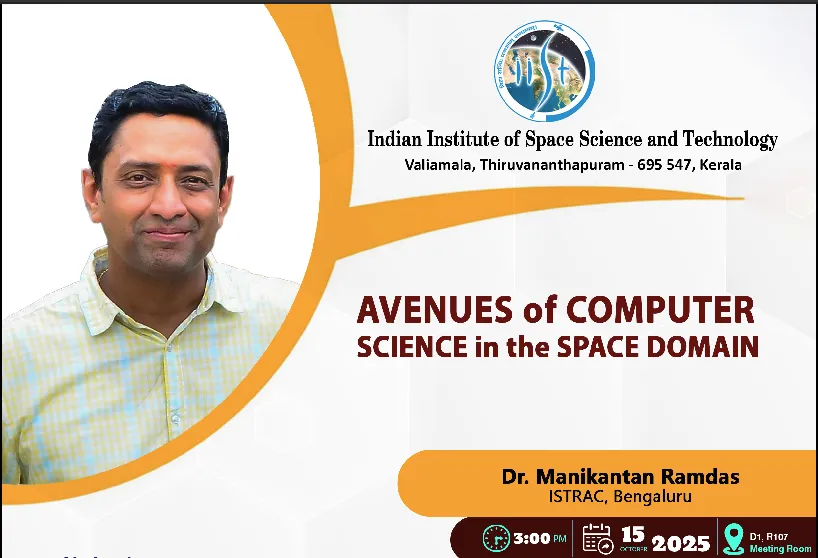
Avenues of Computer Science in the Space Domain
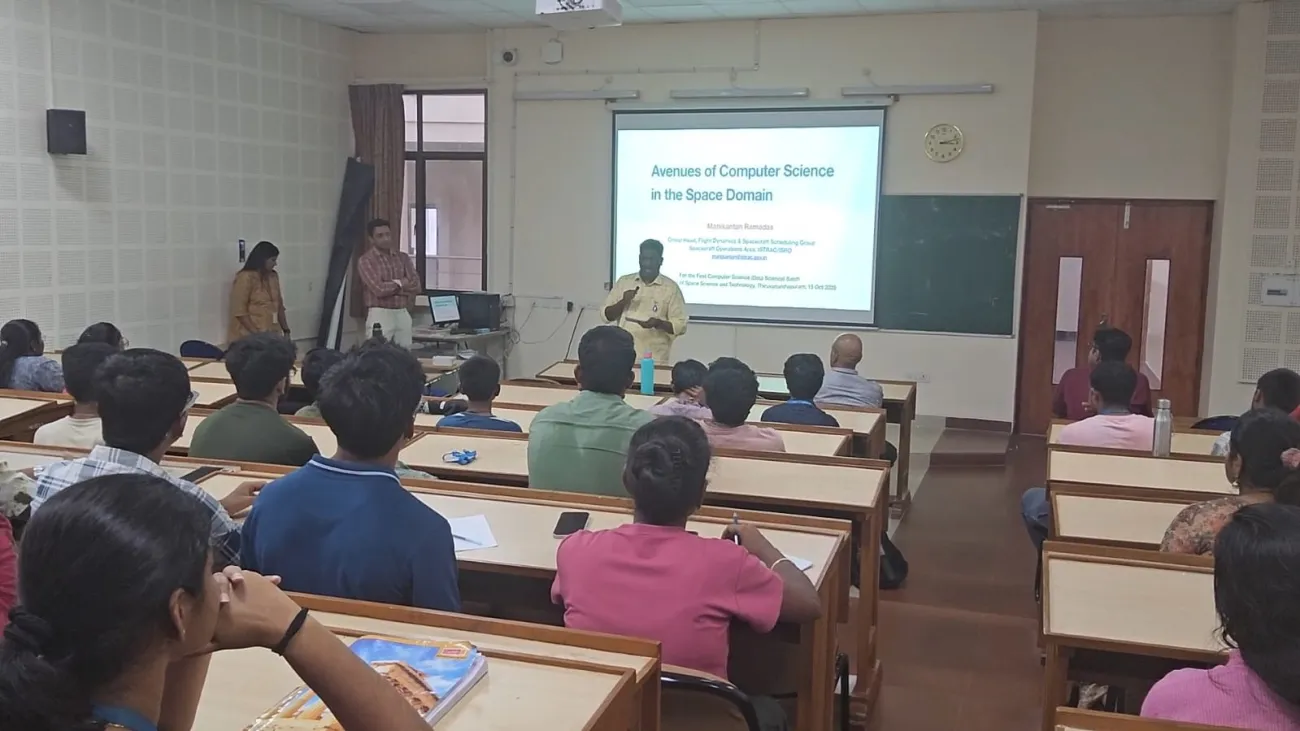
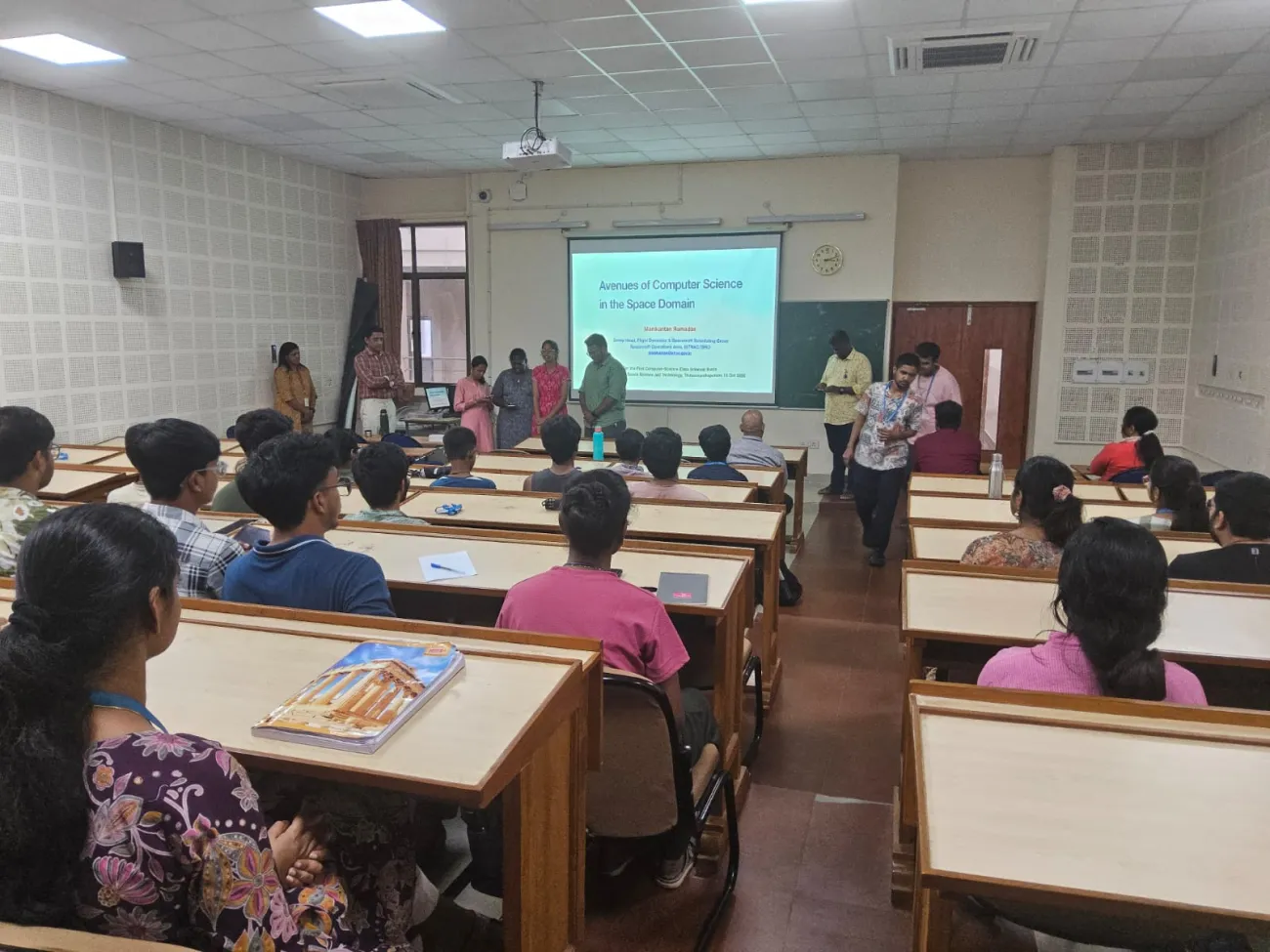
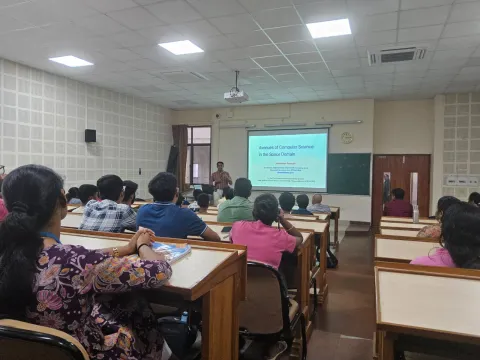
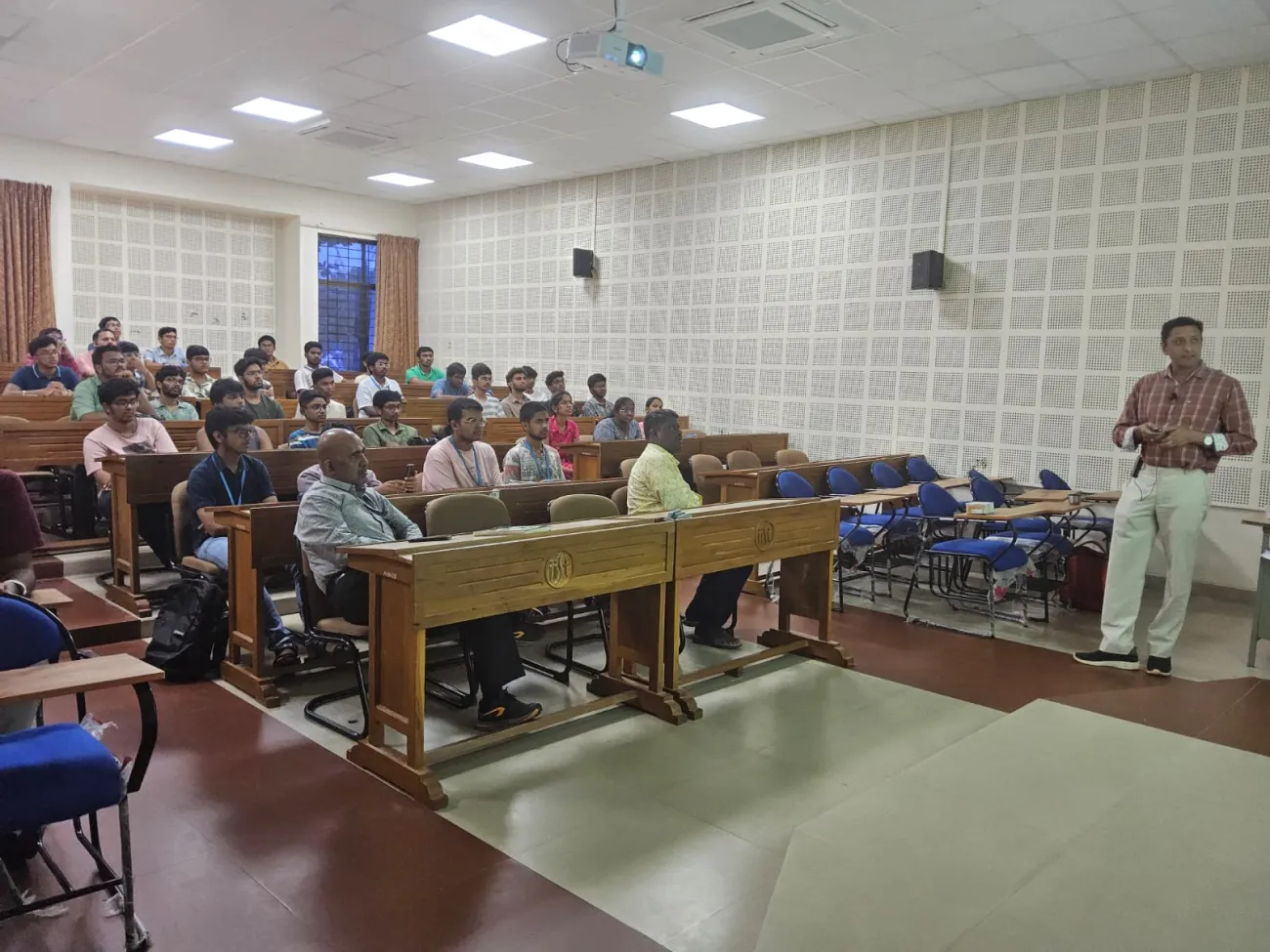
The talk began by providing an introduction to computer science and its broad topics, including Computer Architecture, Programming and Operating Systems, Networks, Space Communication and Cyber Security, Virtualization/Cloud Computing, Software Engineering, Computationally Intensive Problems, and finally AI/ML/DL/LLMS. Starting with Computer Architecture, he briefly explained the differences between CISC and RISC, followed by a case study of the Apple M4 CPU System-on-Chip. The next topic was on the Art of Computer Programming, where he presented a survey of the best-rated programming languages, operating system concepts, and Data Structures and algorithms. Then he explained briefly about Networking and Communications, covering elements such as circuit-switched vs. packet-switched, TCP/IP protocols, routers, and their applications in space communication, Spacecraft control centers, Data centers, cryptography, cyber-security, and Delay- and Disruption-Tolerant communication. He briefly explained the topics of Virtualization and Cloud Computing, including elements such as kernel-level virtual machines, VLANs, Virtual Routing and Forwarding (VRF), Storage virtualization, and Virtual Domain firewalls. With an introduction to Software Engineering, he covered topics such as System requirements, Software requirements, Software design, Implementation, Integration and Testing, Software Maintenance and Support. He also introduced several models, including Waterfall, Agile, and Scrum, along with ISRO’s safety-critical standards for human missions. He went on to explain high-performance computing, which includes Complex algorithms, Simple algorithms for large volumes of data, flight dynamics applications, and Monte Carlo simulations. A case study on high-precision Doppler computation with limitations of double-precision and numerical precision optimization results. Finally, he provided an introduction to AI/ML, tracing its origins back to 1950 and gaining more focus from 1970 onward, with an example of Kepler’s struggle with orbital dynamics, specifically deriving an Elliptical orbit for Mars from Tycho Brahe’s data collection. He presented ChatGPT as a case study with a significant pre-training phase involving 1.6 Billion Parameters captured in the Transformer neural network. He made concluding remarks by offering suggestions and encouraging computer science graduates to pursue their field of interest.
Video Gallery
Venue
D1 Building – R107
Event Details
-
Mode:In-Person