


ASTRA-2026
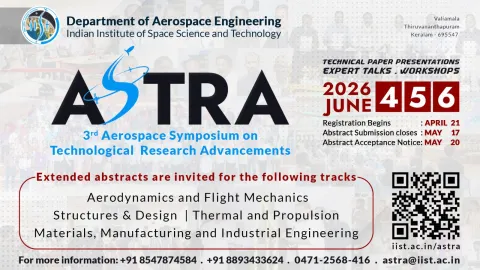
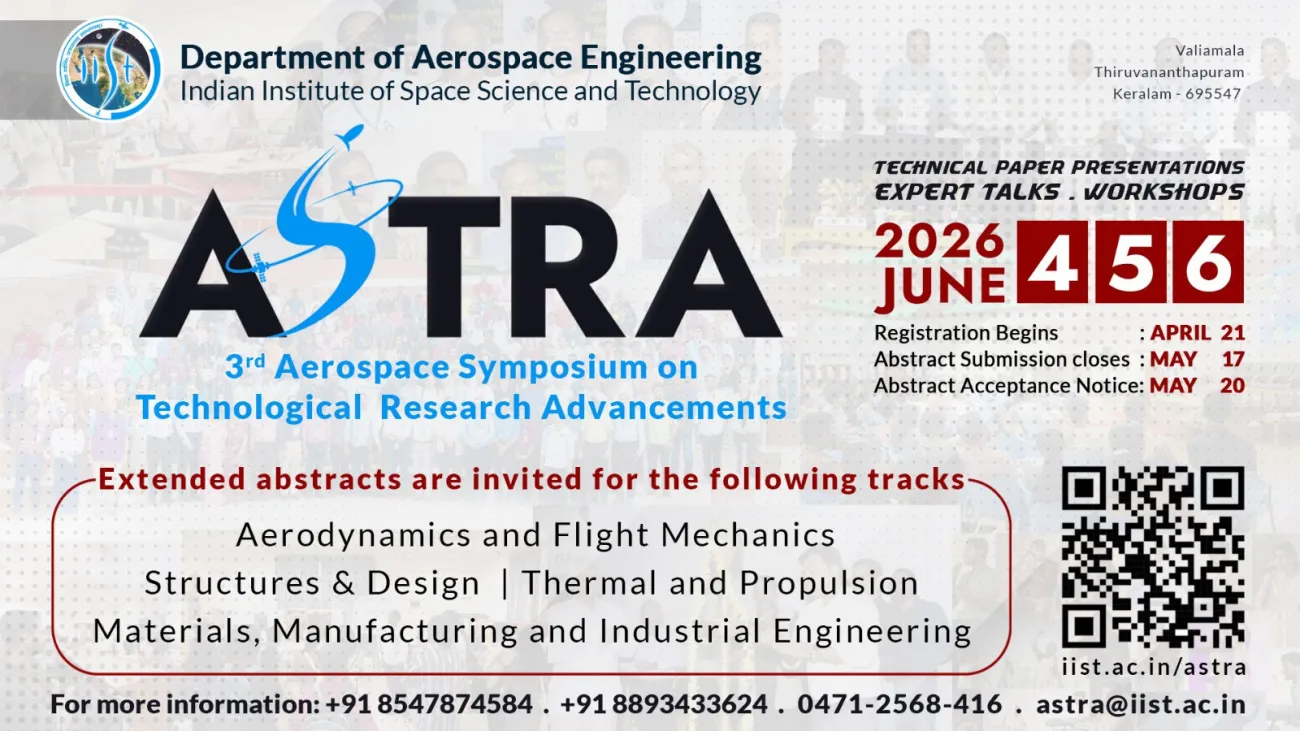
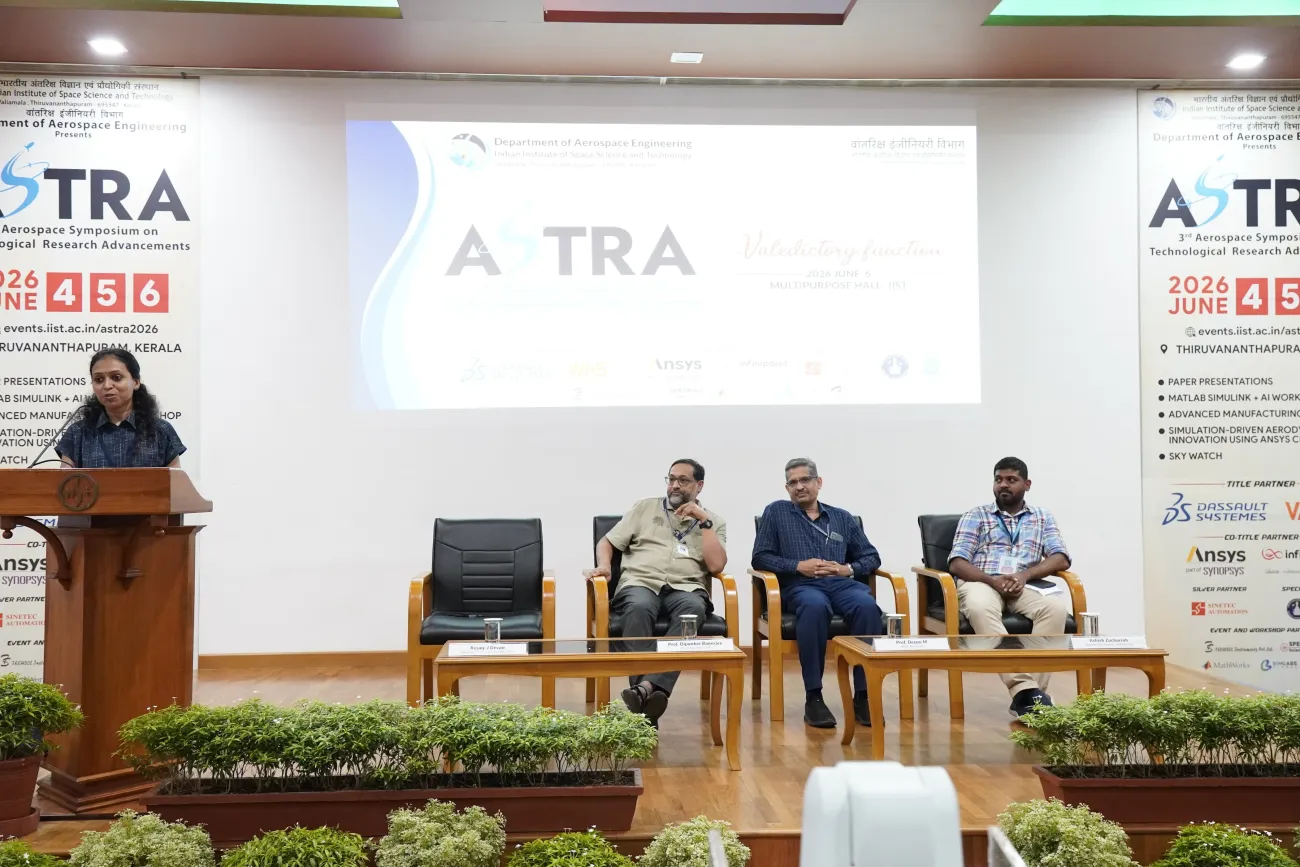
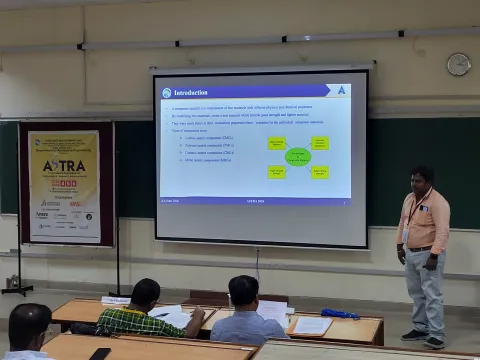
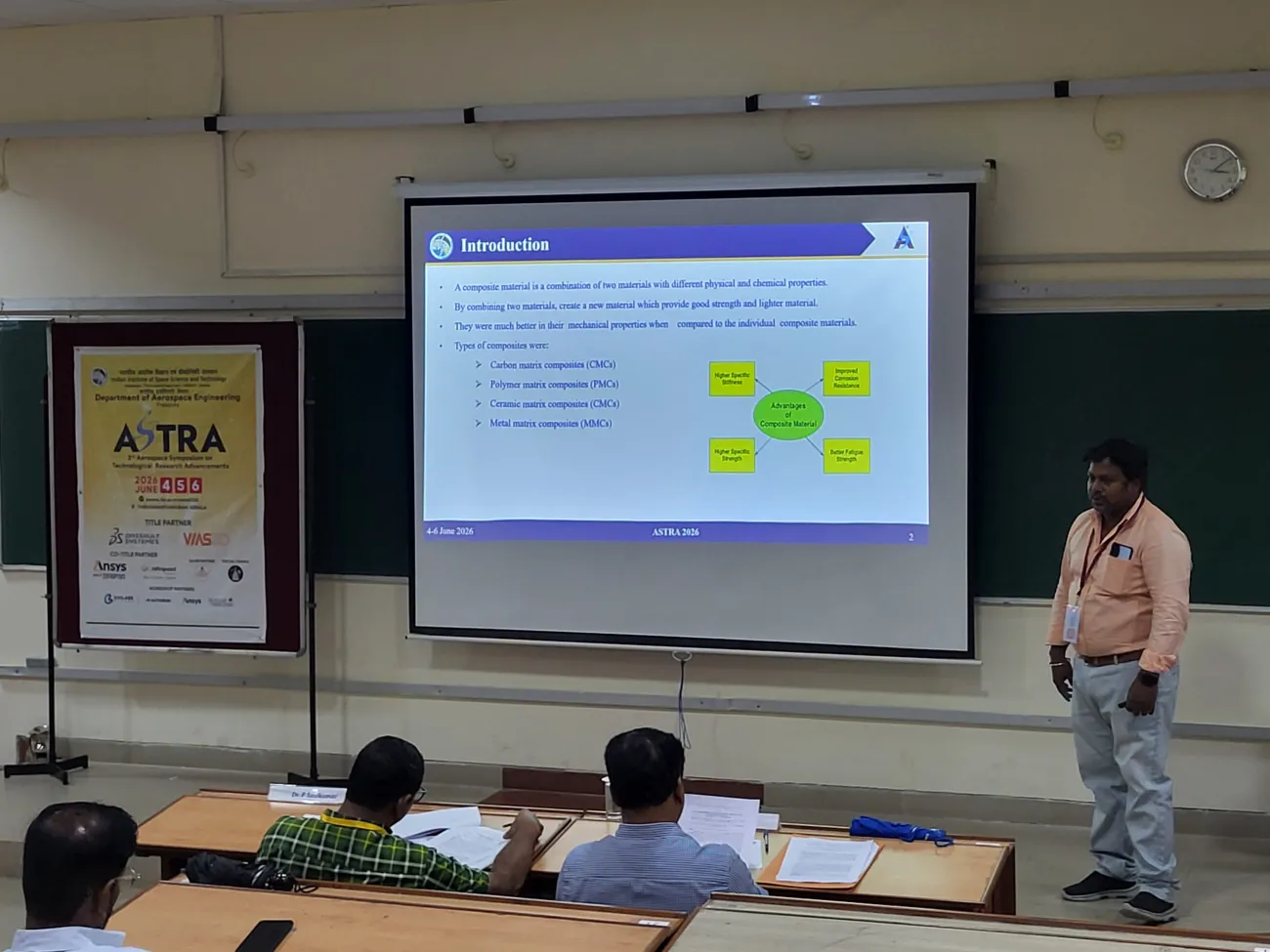
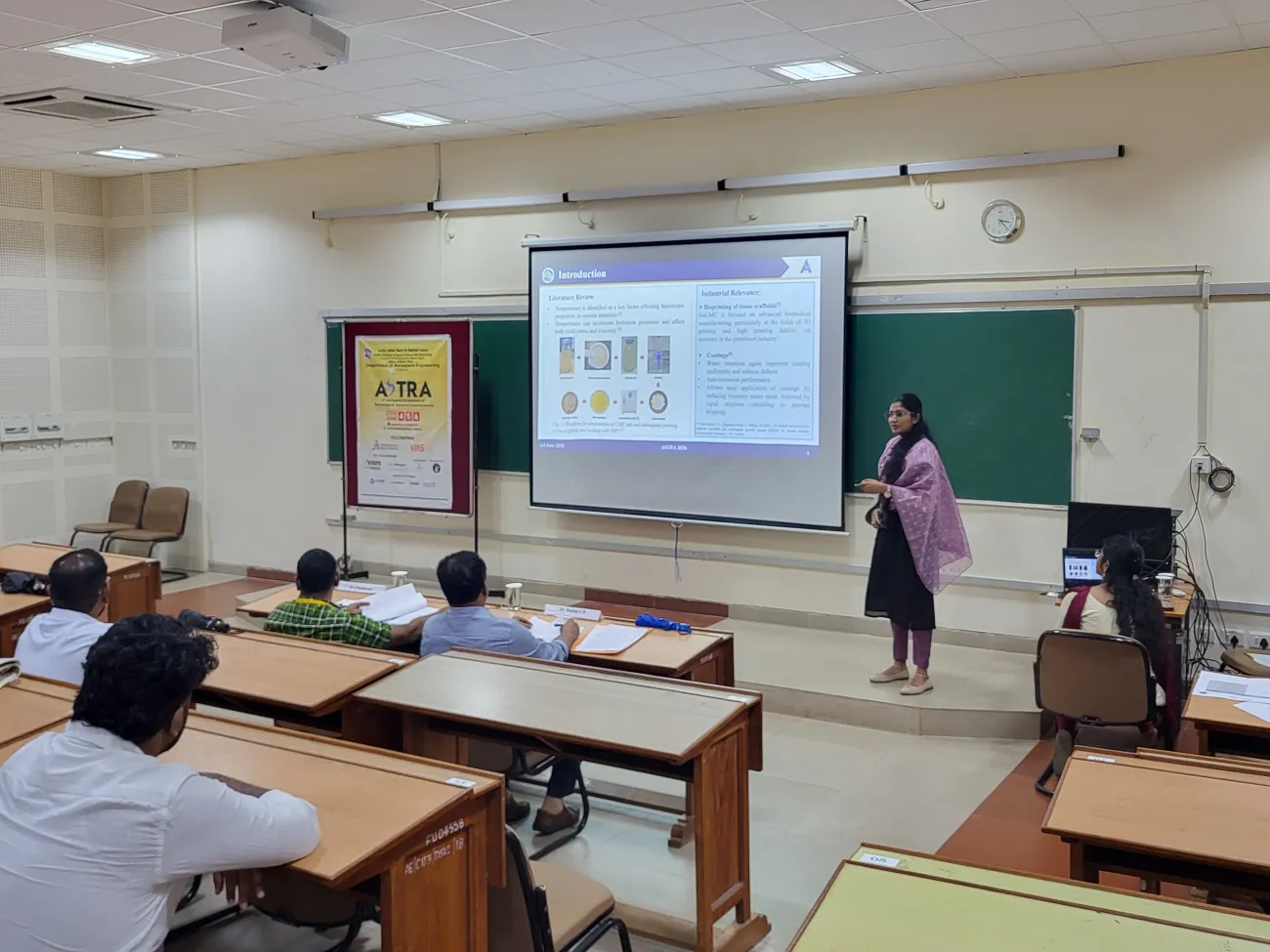
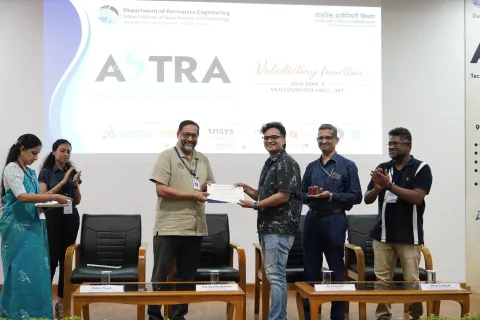
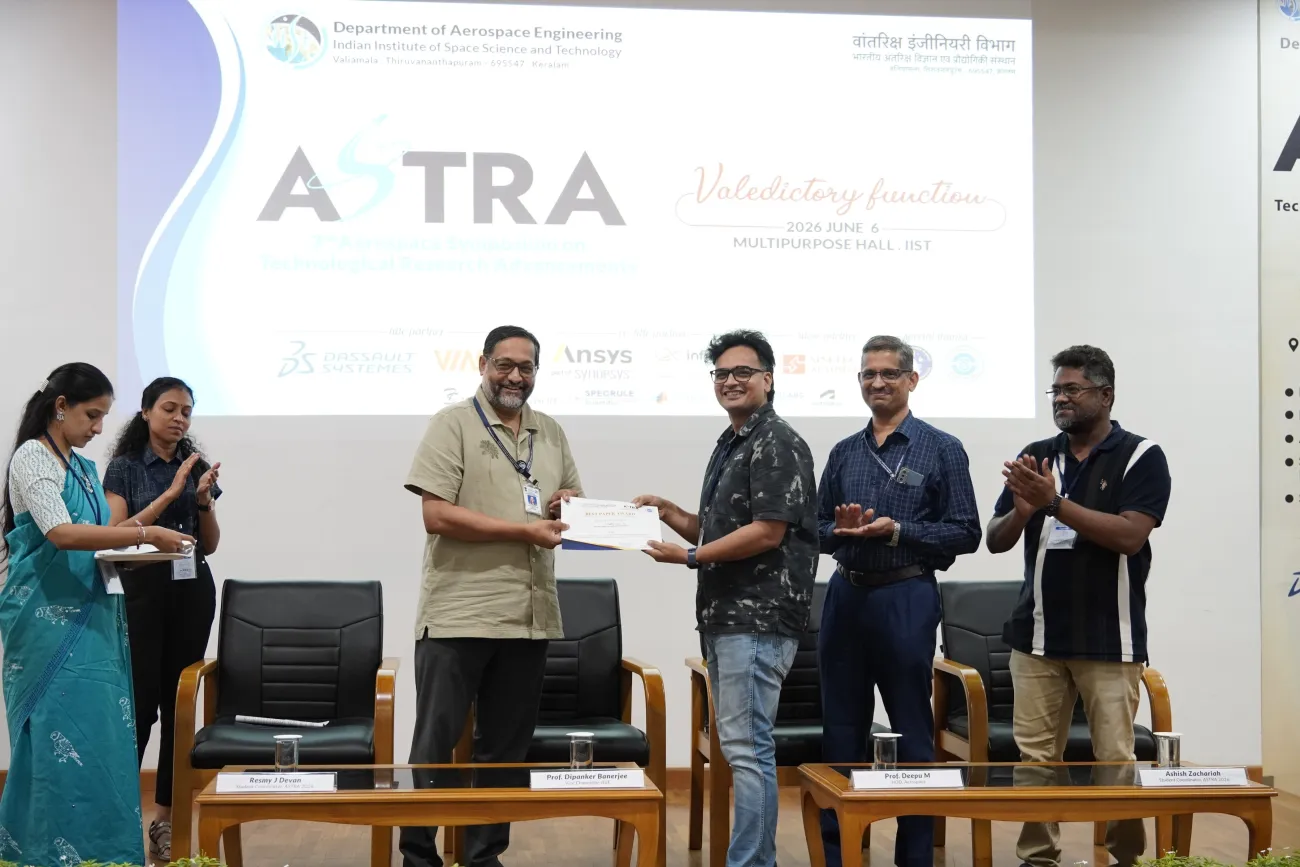
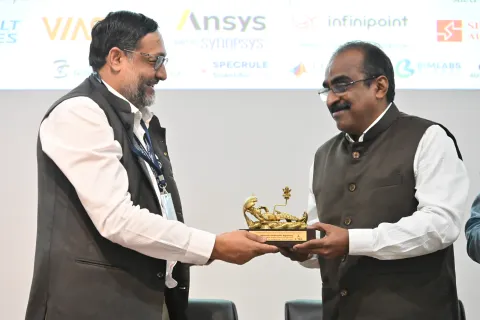
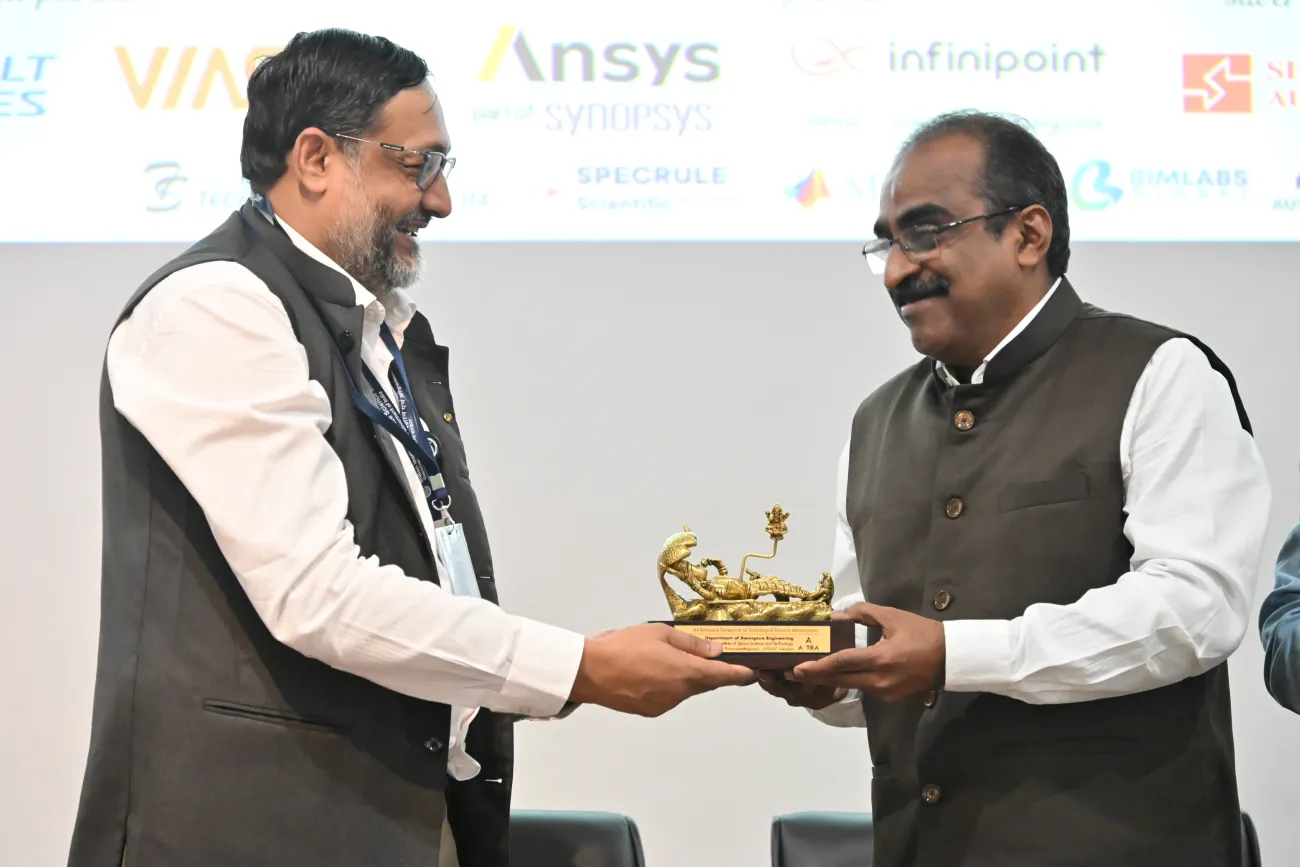
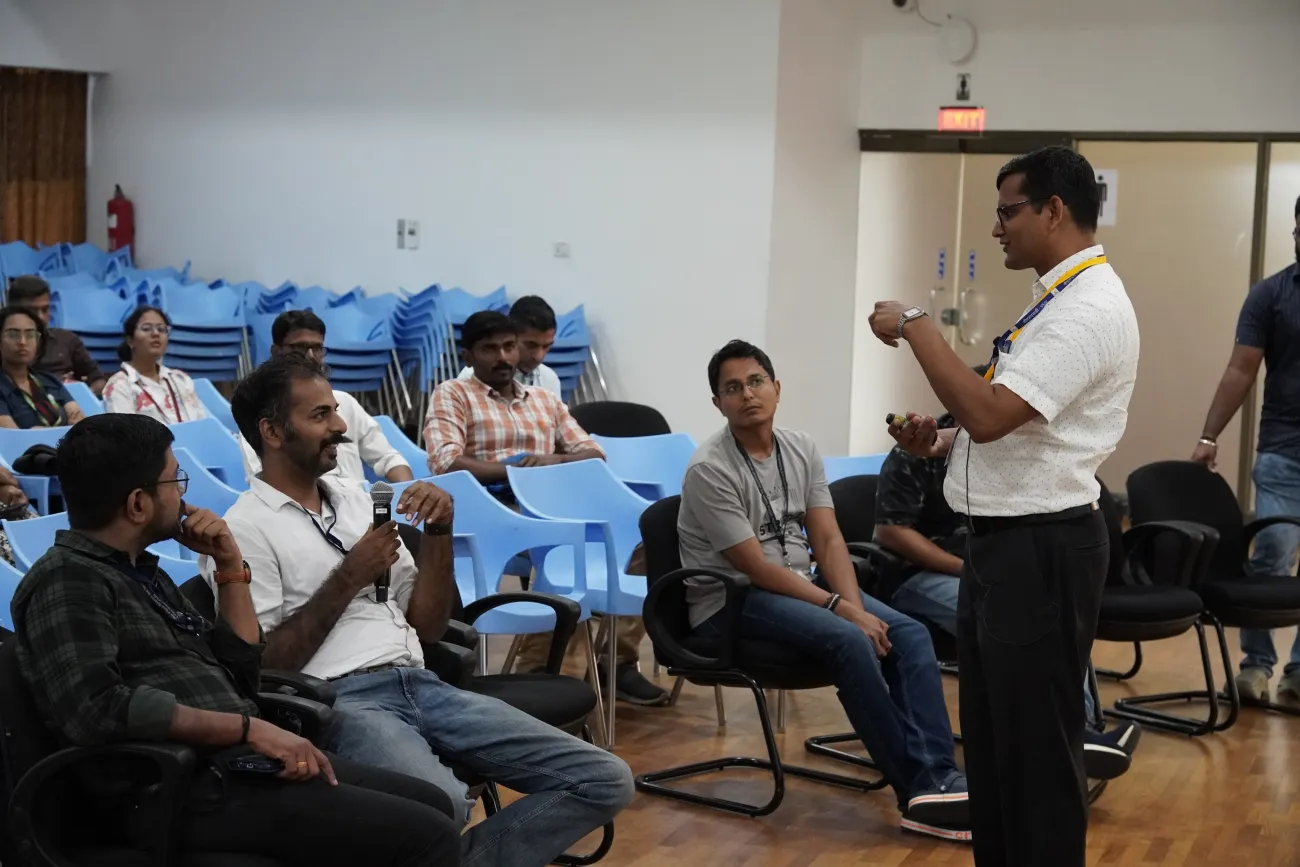
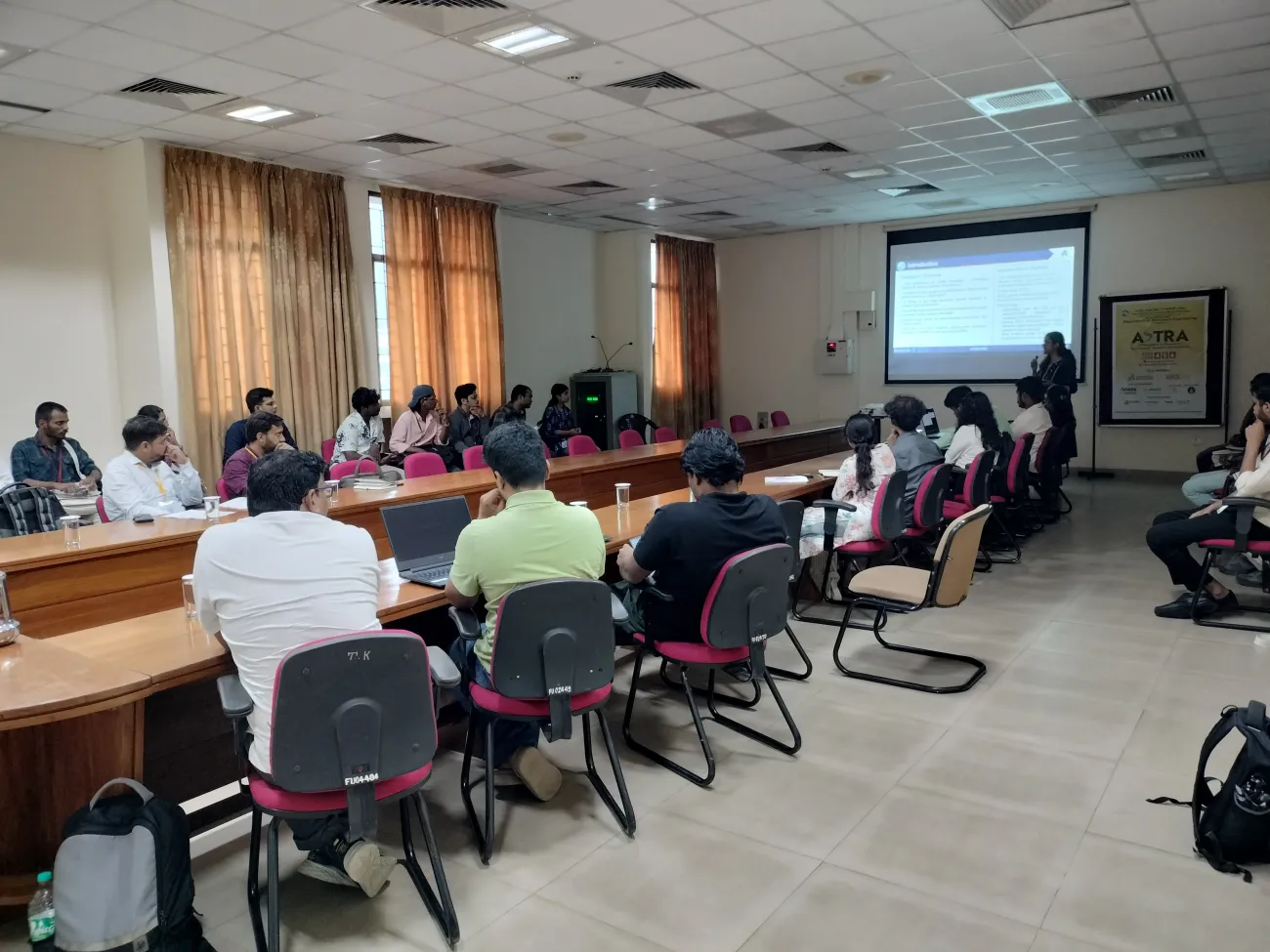
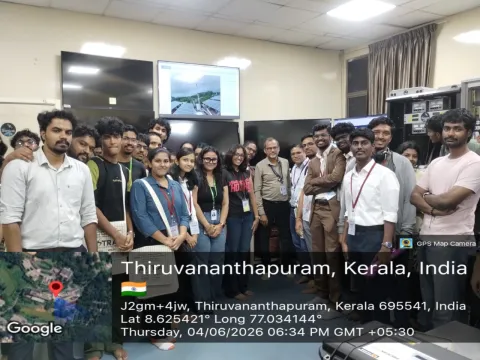
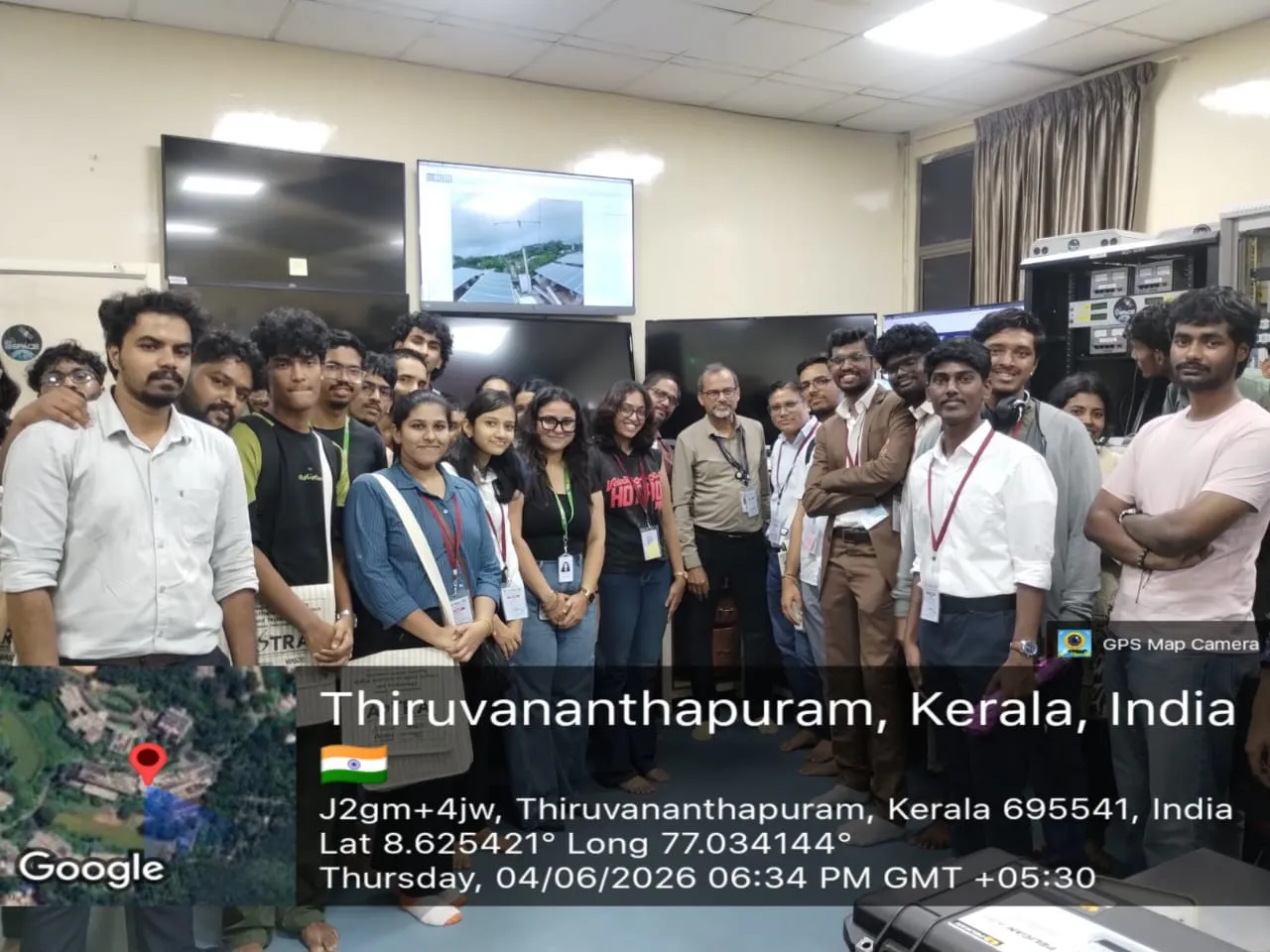
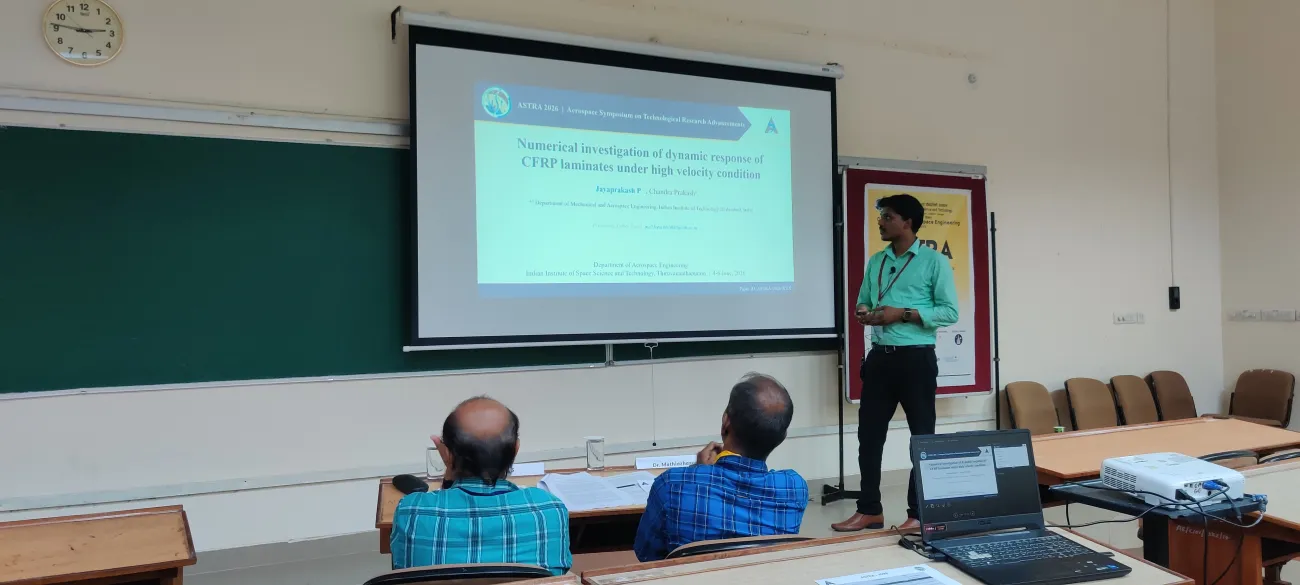
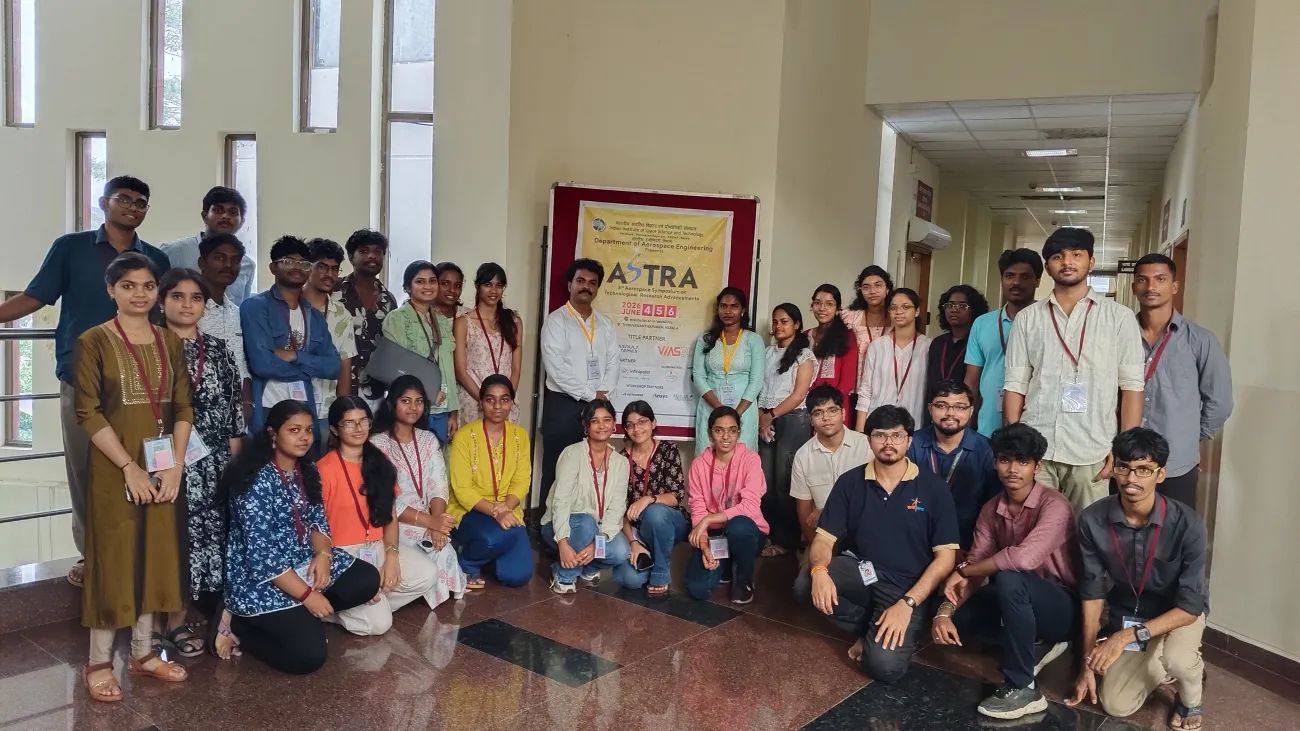
ASTRA 2026, the Third National Symposium on Advances in Aerospace Science, Technology and Research, was organized by the Department of Aerospace Engineering, Indian Institute of Space Science and Technology (IIST), Thiruvananthapuram, during 4-5 June 2026 at the IIST campus. The conference served as a national platform for researchers, academicians, industry professionals, scientists, and students to exchange ideas, present recent research findings, and discuss emerging trends across the broad spectrum of aerospace science and engineering.
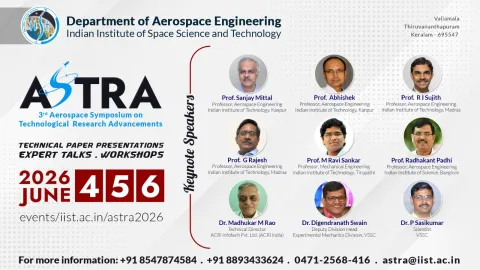
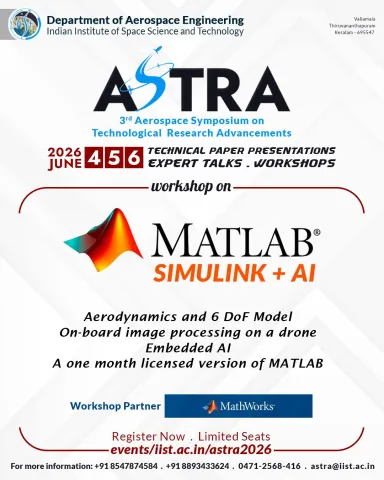
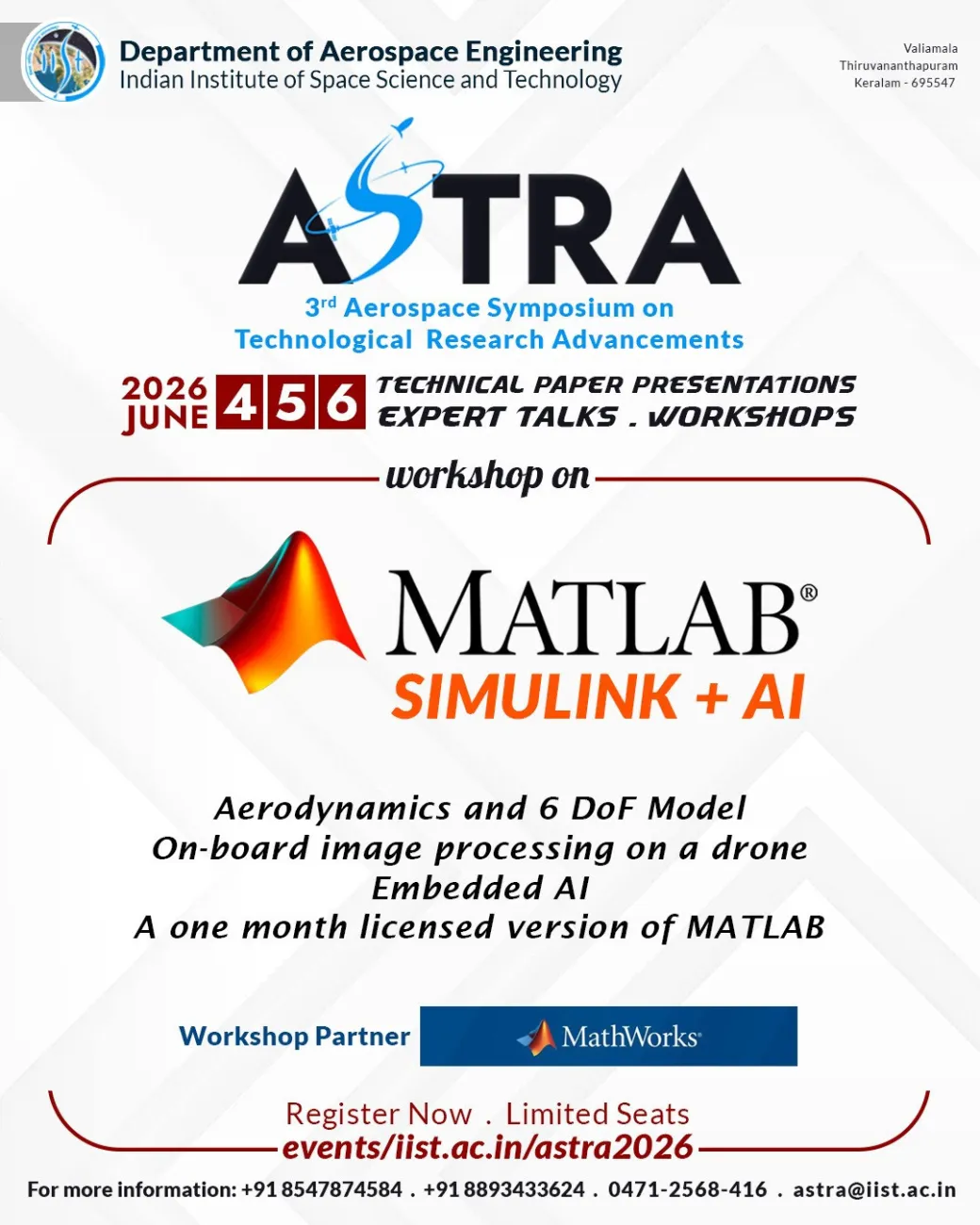
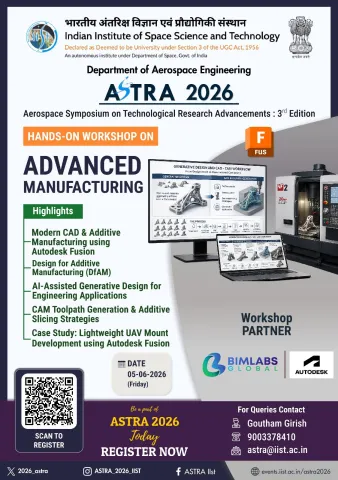
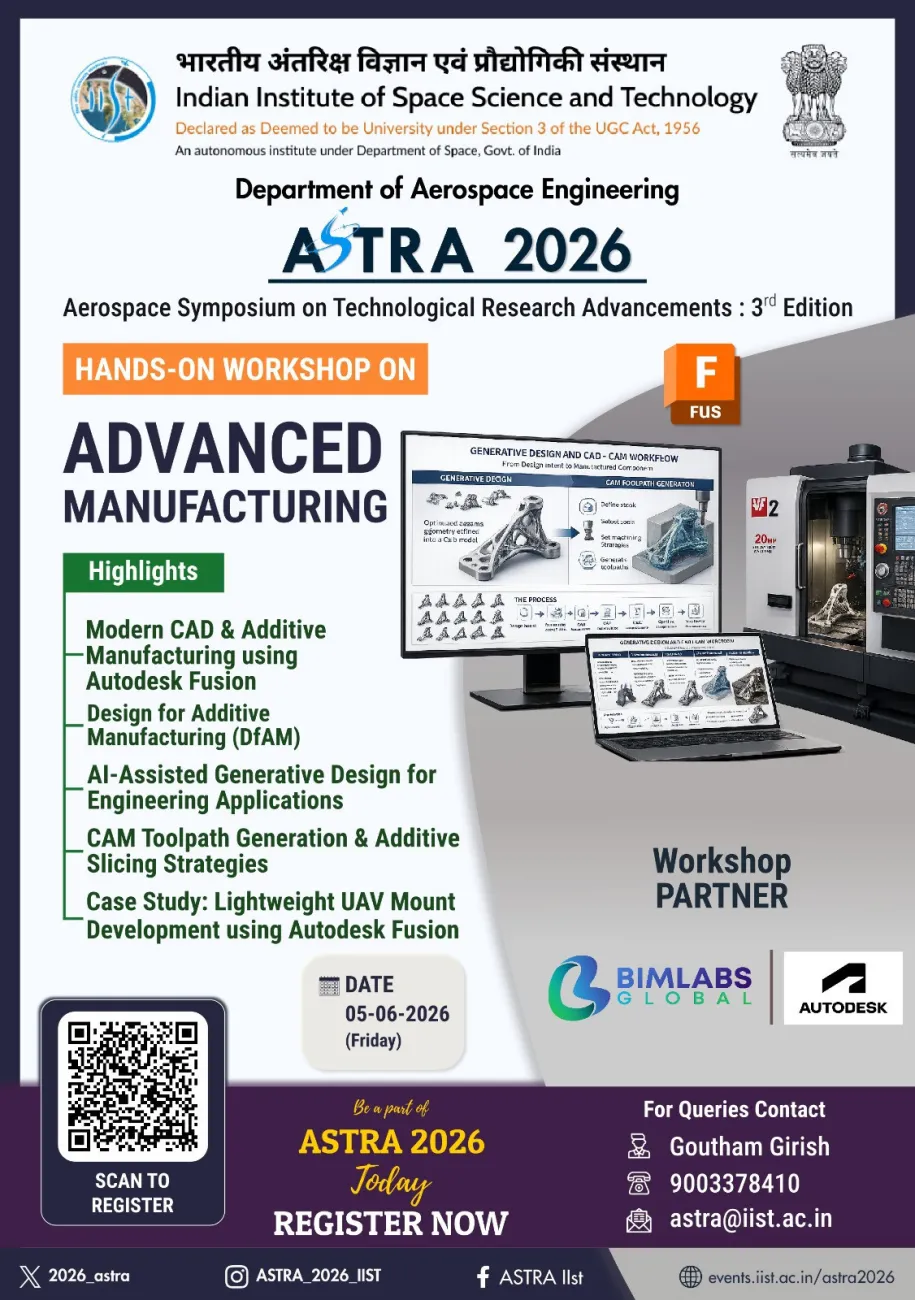
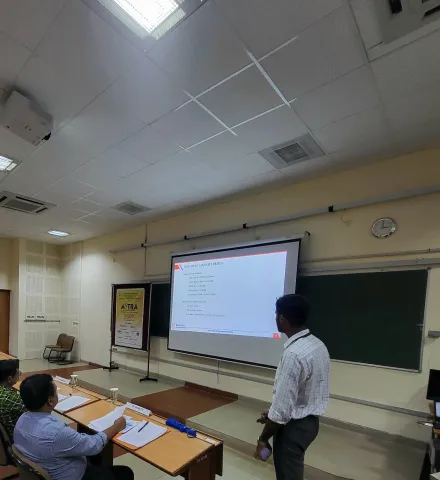
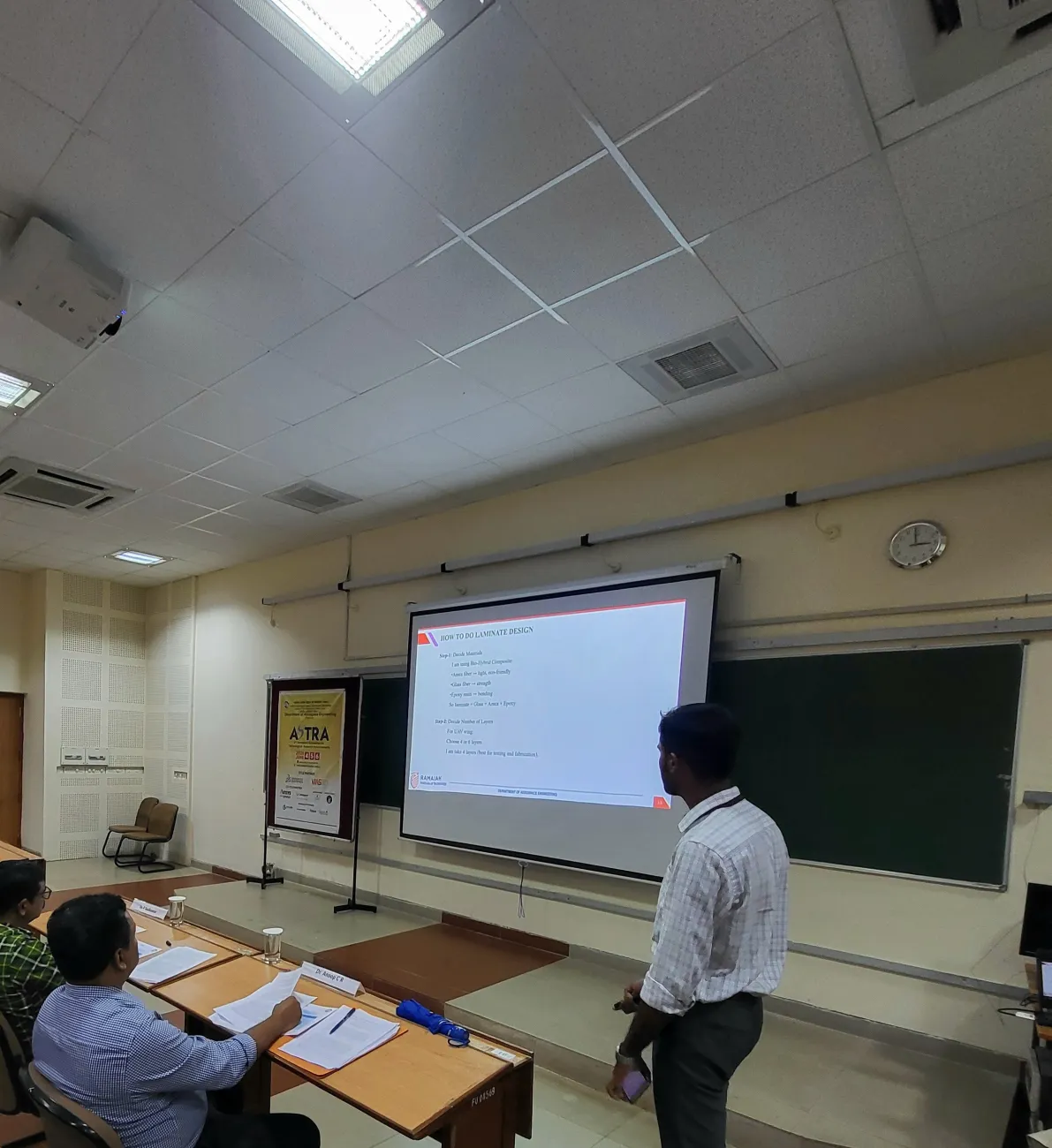
The symposium brought together participants from leading academic institutions, research organizations, government laboratories, and aerospace industries across the country. With contributions spanning aerodynamics, propulsion, aerospace structures, materials and manufacturing, guidance and control, computational methods, unmanned aerial systems, artificial intelligence, and space technologies, ASTRA 2026 reflected the increasingly interdisciplinary nature of contemporary aerospace research. The technical programme comprised 9 keynote lectures delivered by eminent experts from academia, industry, and national research organizations, providing participants with valuable insights into current research challenges and future technological directions. The conference also featured 7 parallel technical sessions covering 4 thematic tracks. These sessions highlighted innovative developments in computational modelling, advanced manufacturing, structural health monitoring, sustainable propulsion, intelligent autonomous systems, aerospace materials, and multidisciplinary design methodologies. In addition to the technical presentations, ASTRA 2026 included 3 workshops, laboratory visits, industry interactions, and networking opportunities that encouraged meaningful engagement between students, researchers, faculty members, and practicing engineers. These activities fostered knowledge exchange beyond the formal technical sessions while strengthening collaborations between academic institutions and industry. The conference witnessed enthusiastic participation from 222 delegates representing 76 institutions, including premier educational institutions, research laboratories, government organizations, and private industries. The diversity of participation underscored the growing interest in collaborative research and innovation within the Indian aerospace community. A notable feature of ASTRA 2026 was the significant integration of computational techniques, artificial intelligence, machine learning, advanced manufacturing, and sustainable aerospace technologies across multiple technical domains. Many of the presented works demonstrated the increasing convergence of traditional aerospace disciplines with data-driven methods, autonomous systems, and multidisciplinary optimization, reflecting the evolving landscape of aerospace research and development. Selected high-quality research papers presented during the conference will be considered for publication in Springer Lecture Notes in Mechanical Engineering, following the prescribed peer-review process, thereby extending the scientific impact of the conference beyond the event itself. The successful organization of ASTRA 2026 was made possible through the dedicated efforts of the Organizing Committee, Technical Programme Committee, faculty members, staff, student volunteers, reviewers, session chairs, keynote speakers, sponsors, and participating institutions. Their collective contributions ensured the smooth conduct of the symposium and facilitated an enriching academic environment for all participants. Overall, ASTRA 2026 successfully achieved its objective of promoting scientific dialogue, fostering interdisciplinary collaboration, and strengthening connections between academia, research organizations, and industry. The conference provided an important platform for disseminating high-quality research, encouraging innovation, and inspiring future developments in aerospace science and technology. The discussions, collaborations, and ideas that emerged during the symposium are expected to contribute meaningfully to ongoing research efforts and to further advance India's rapidly evolving aerospace ecosystem.
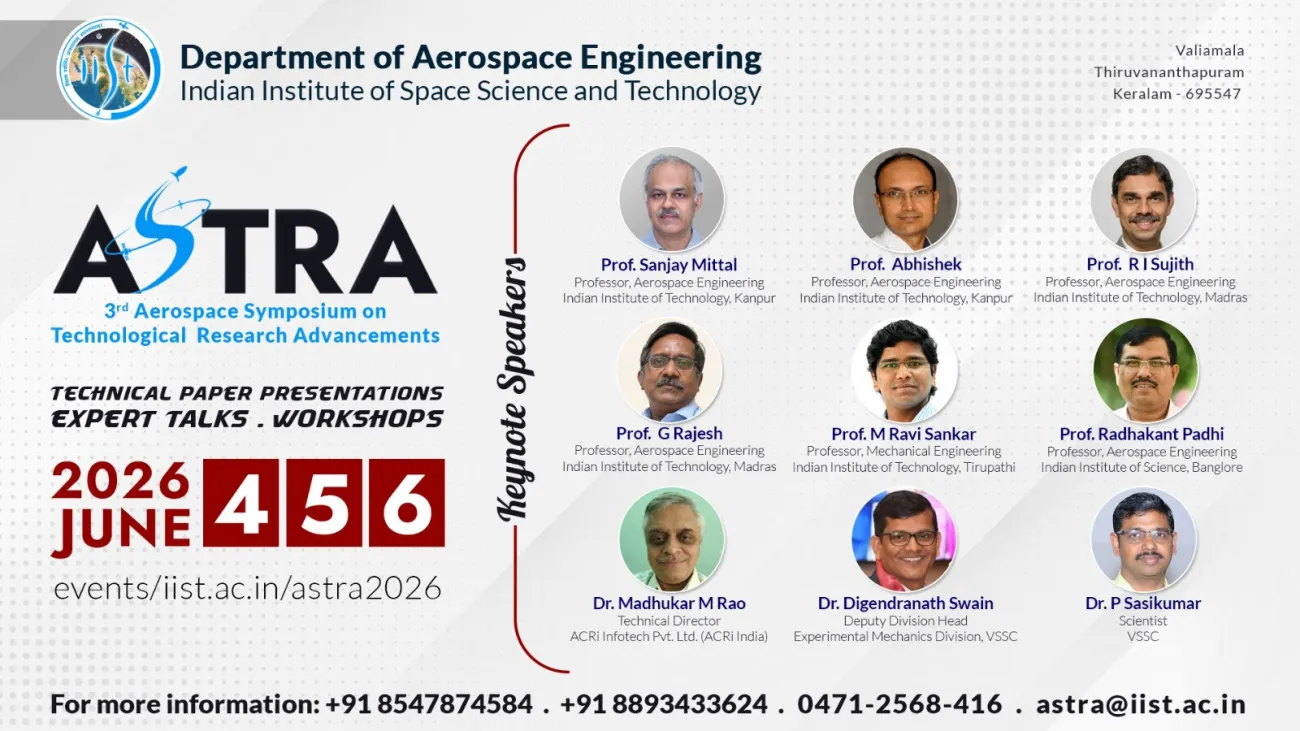
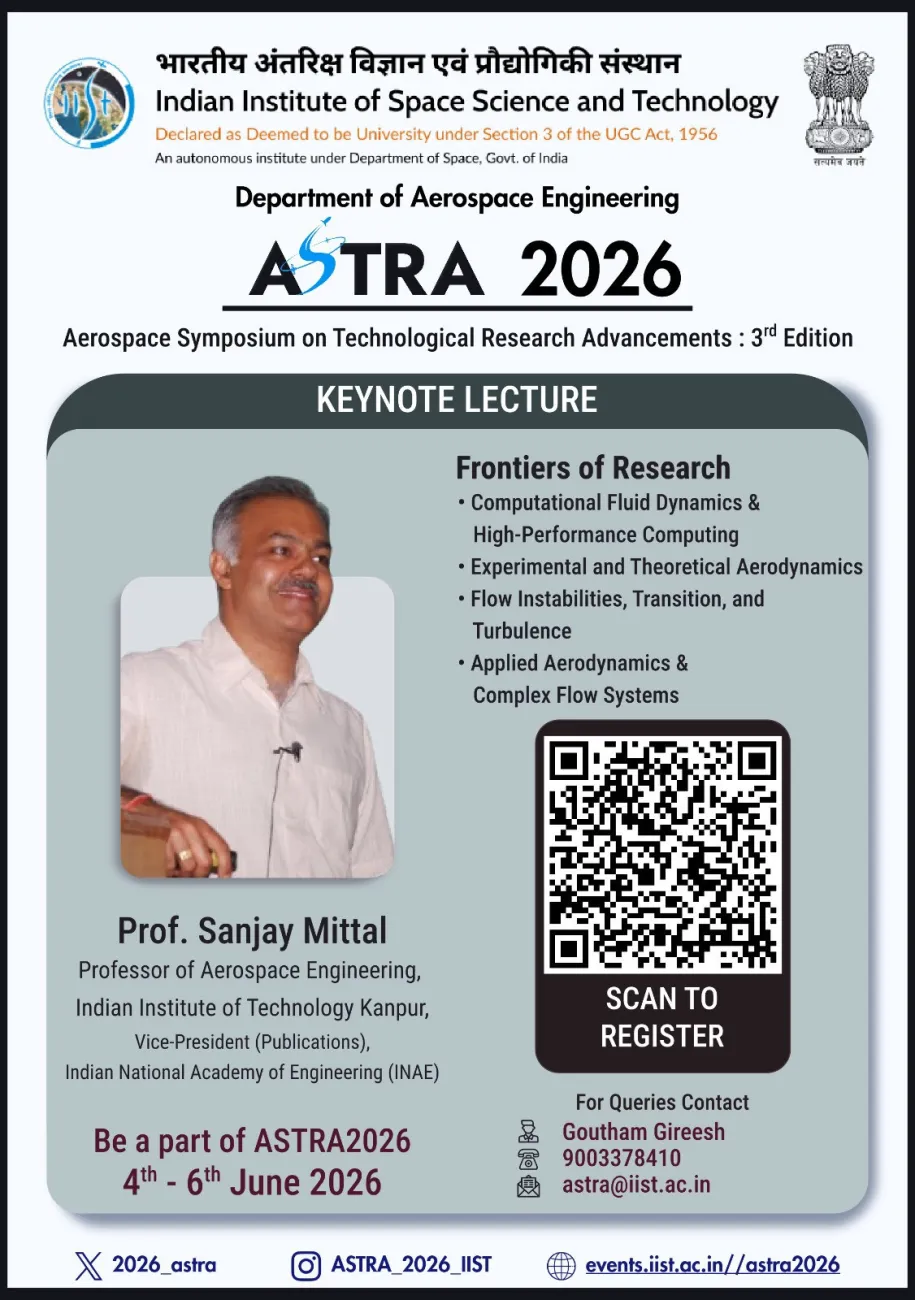
- Prof Sanjay Mittal
Professor of Aerospace Engineering
Indian Institute of Technology Kanpur
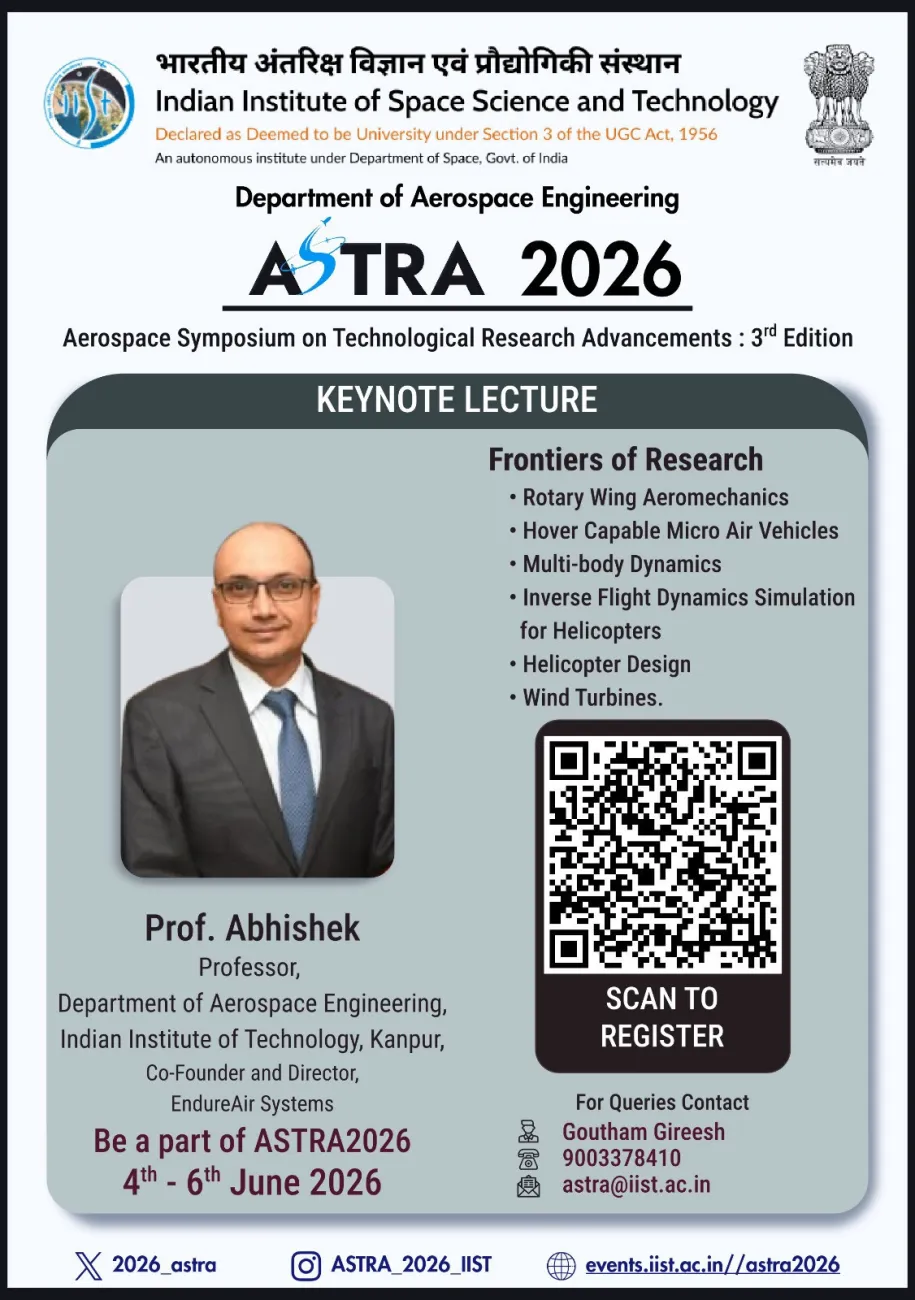
- Prof Abhishek
Professor of Aerospace Engineering
Indian Institute of Technology Kanpur
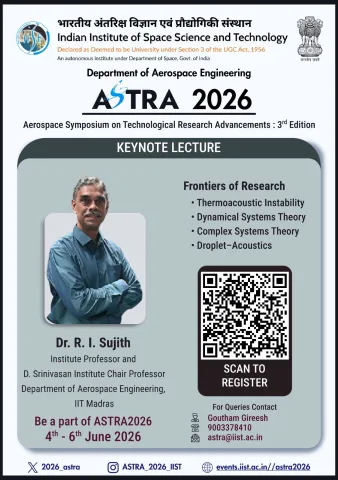
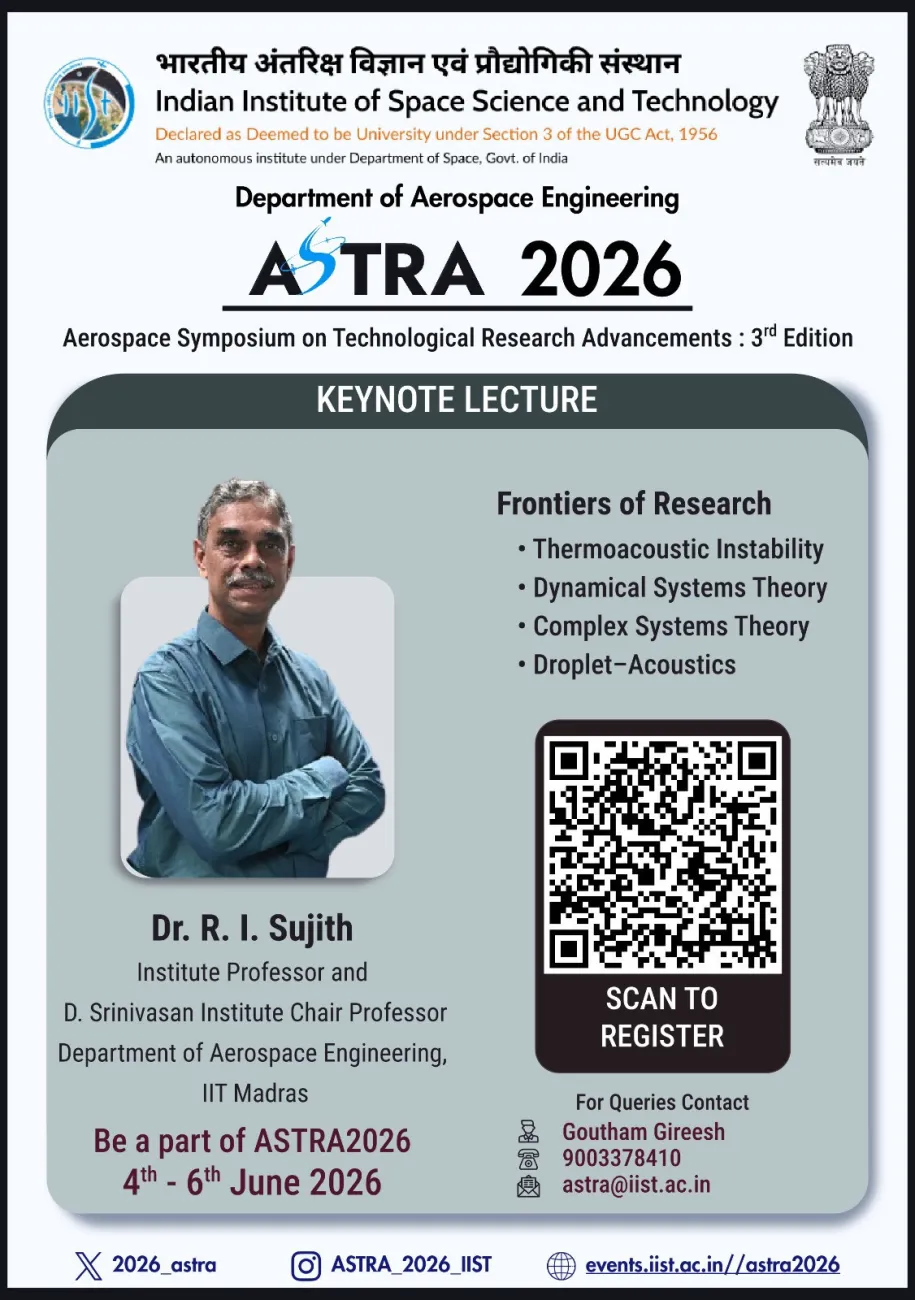
- Prof. Sujith
Professor of Aerospace Engineering
Indian Institute of Technology Madras
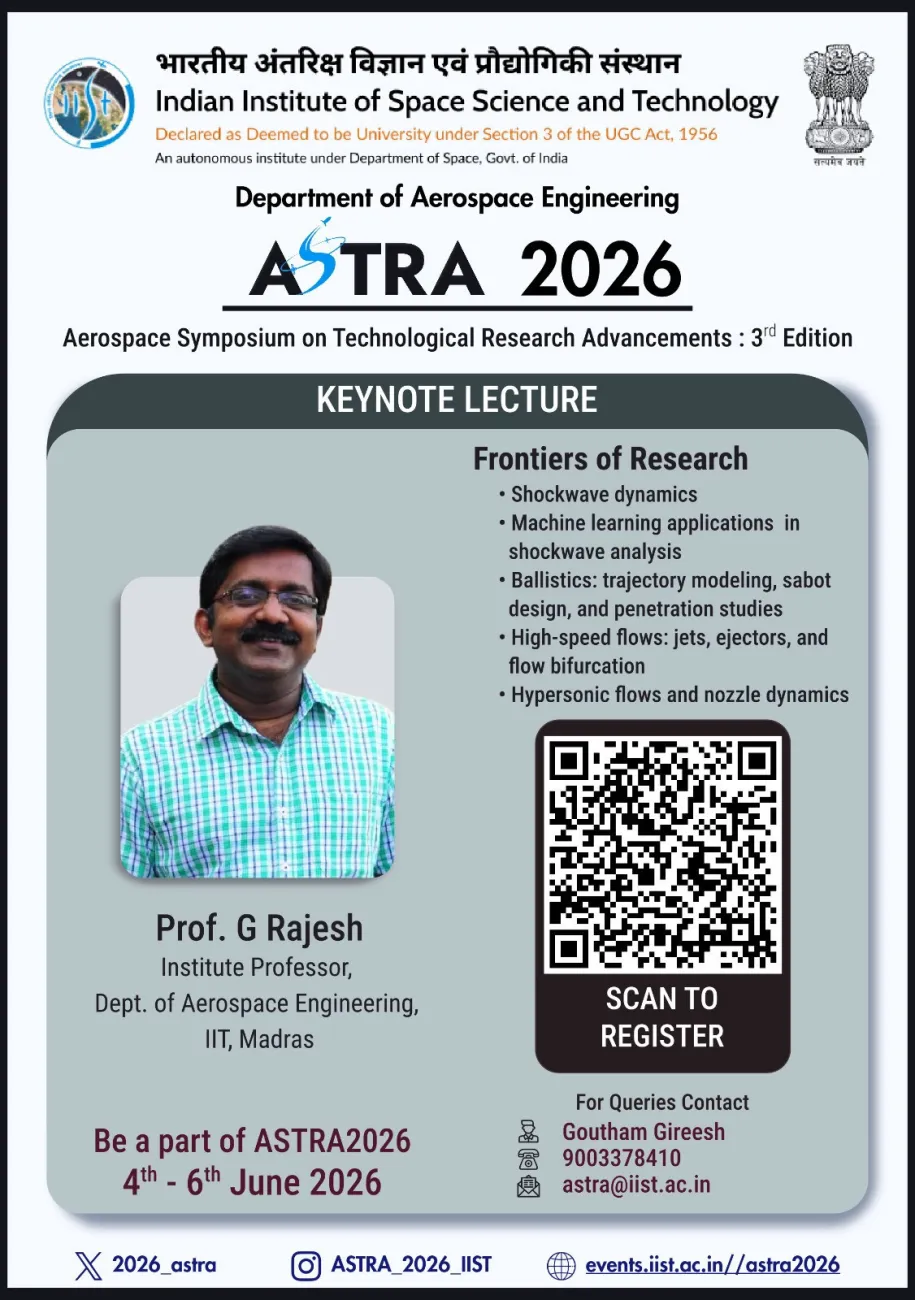
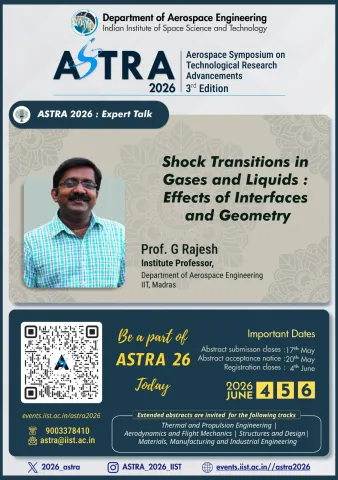
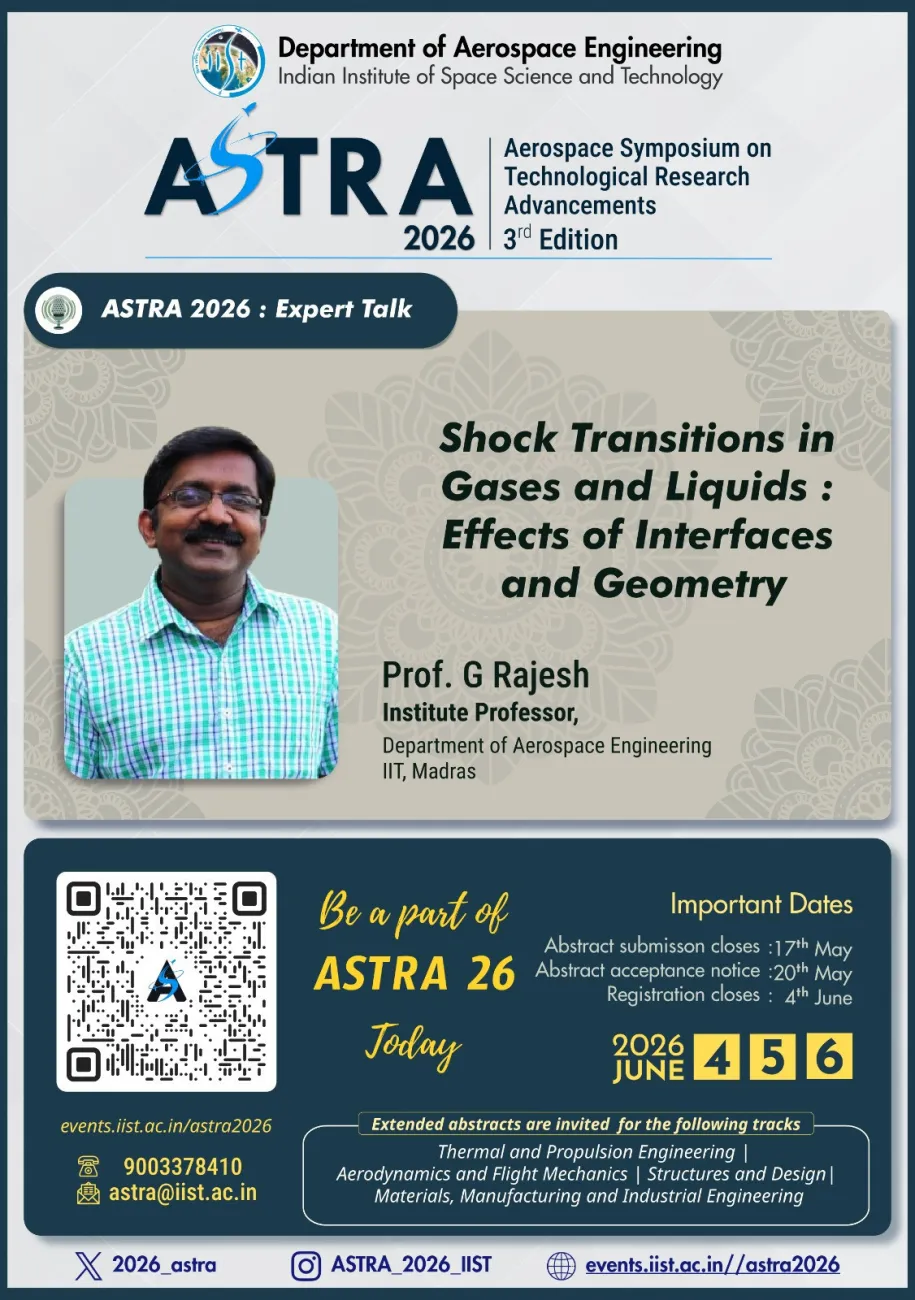
- Prof. Rajesh
Professor of Aerospace Engineering
Indian Institute of Technology Madras
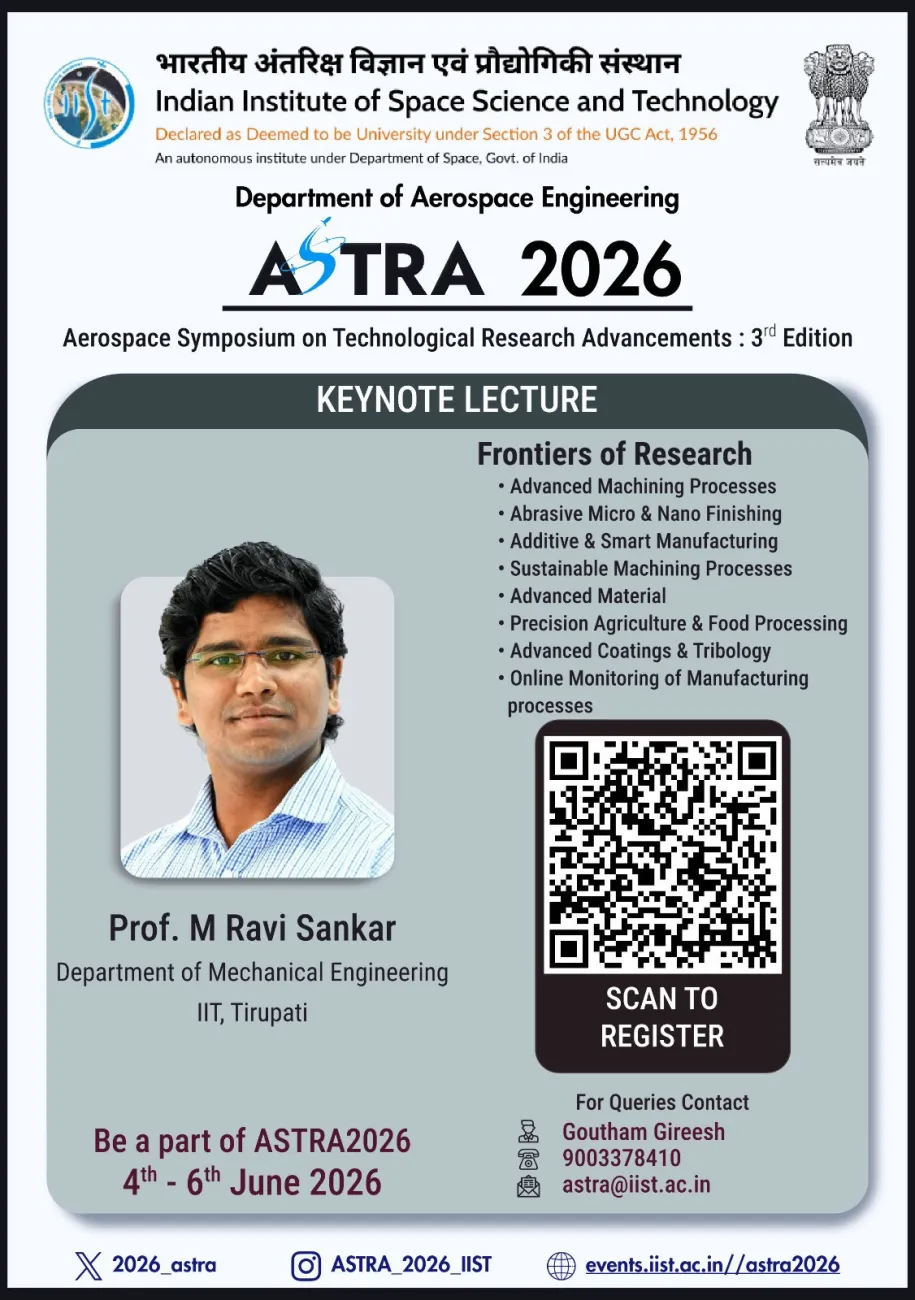
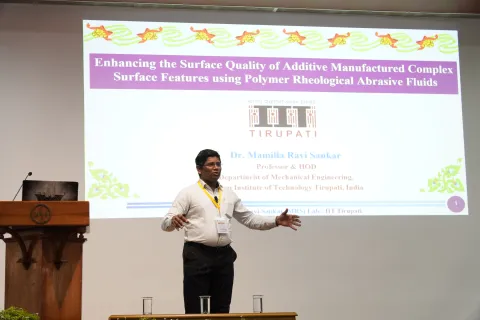
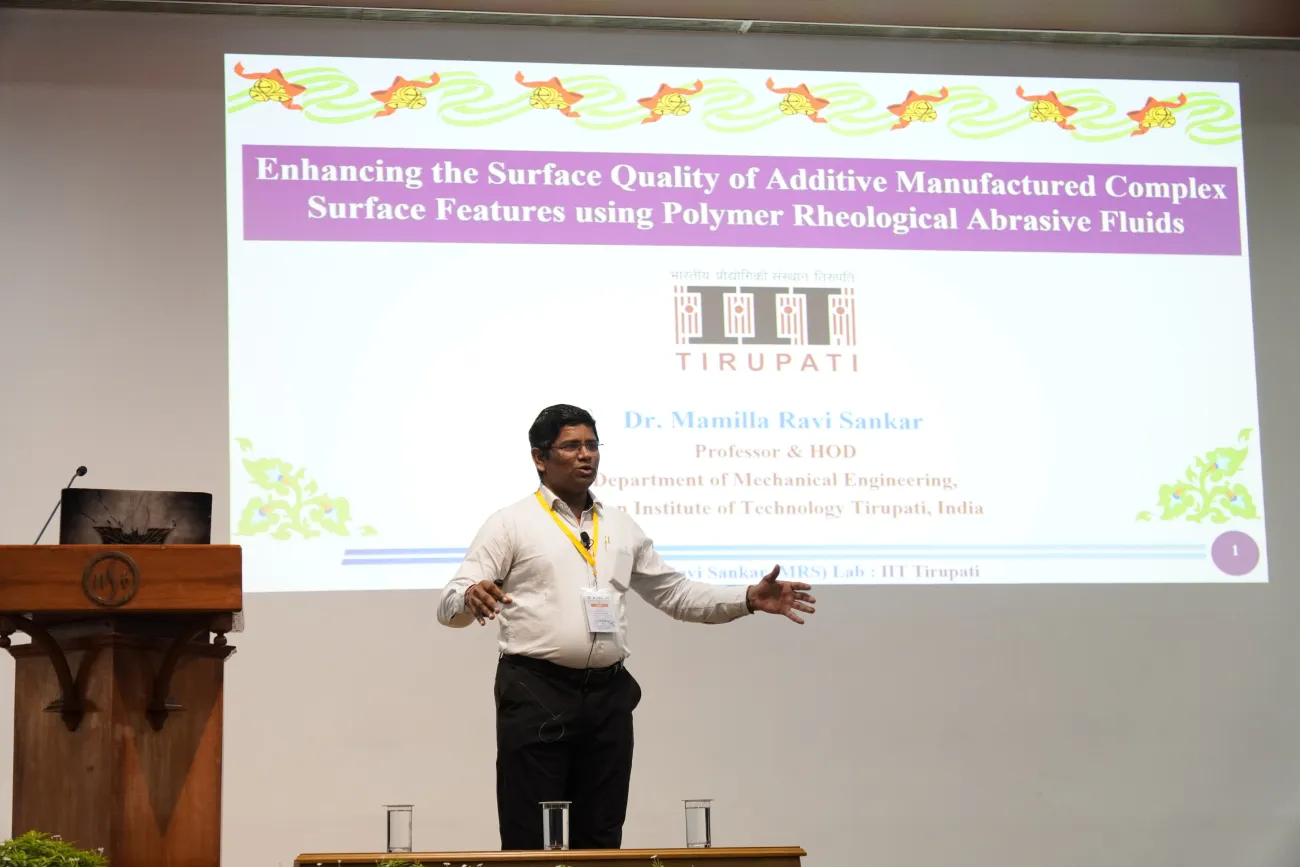
- Prof. M. Ravi Sankar
Professor of Mechanical Engineering
Indian Institute of Technology Tirupathi
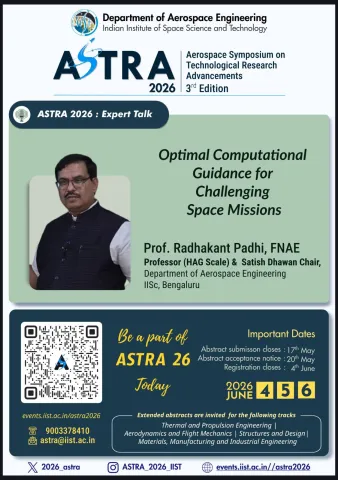
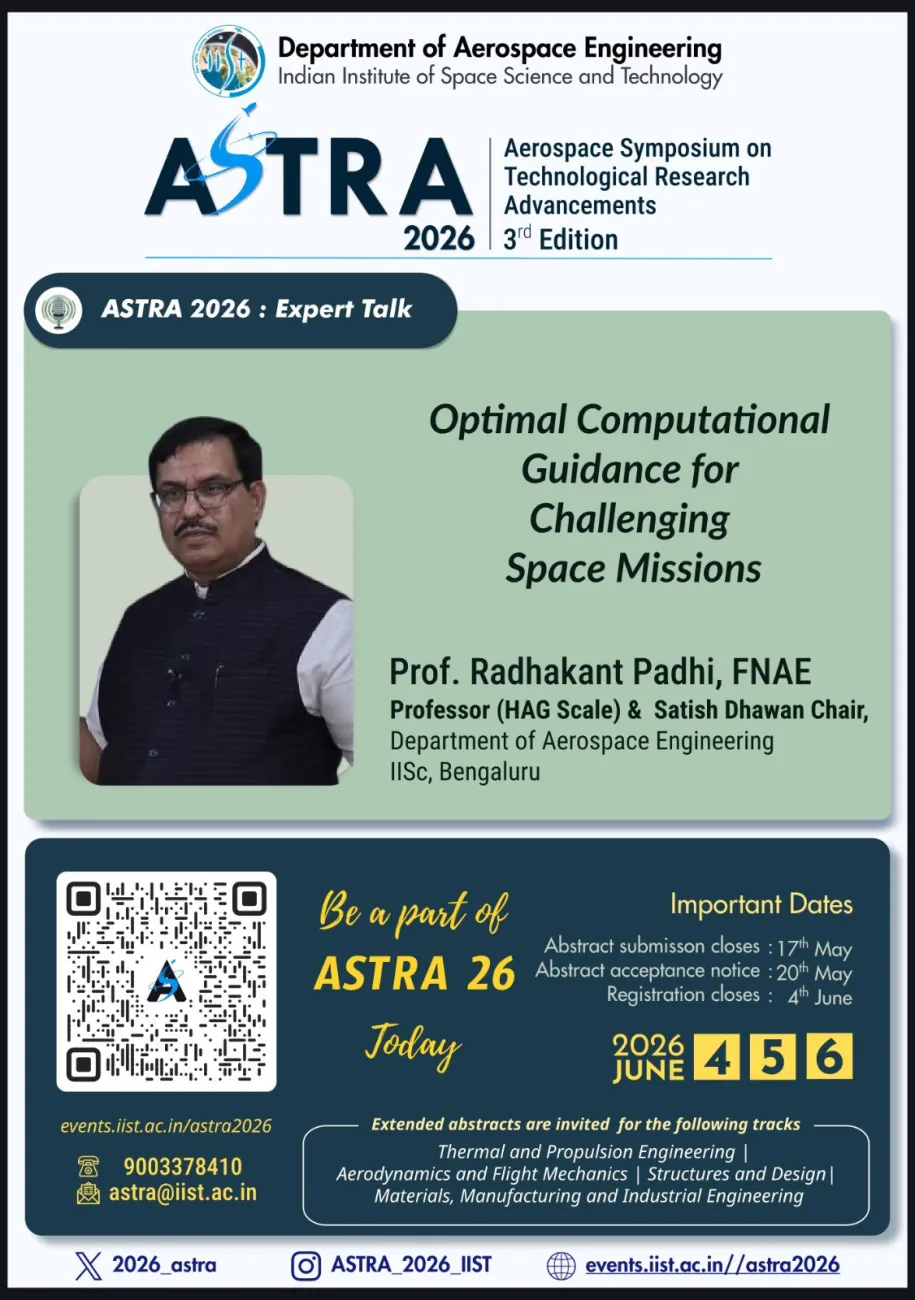
- Prof. Radhakant Padhi
Professor of Aerospace Engineering
Indian Institute of Science Bengaluru
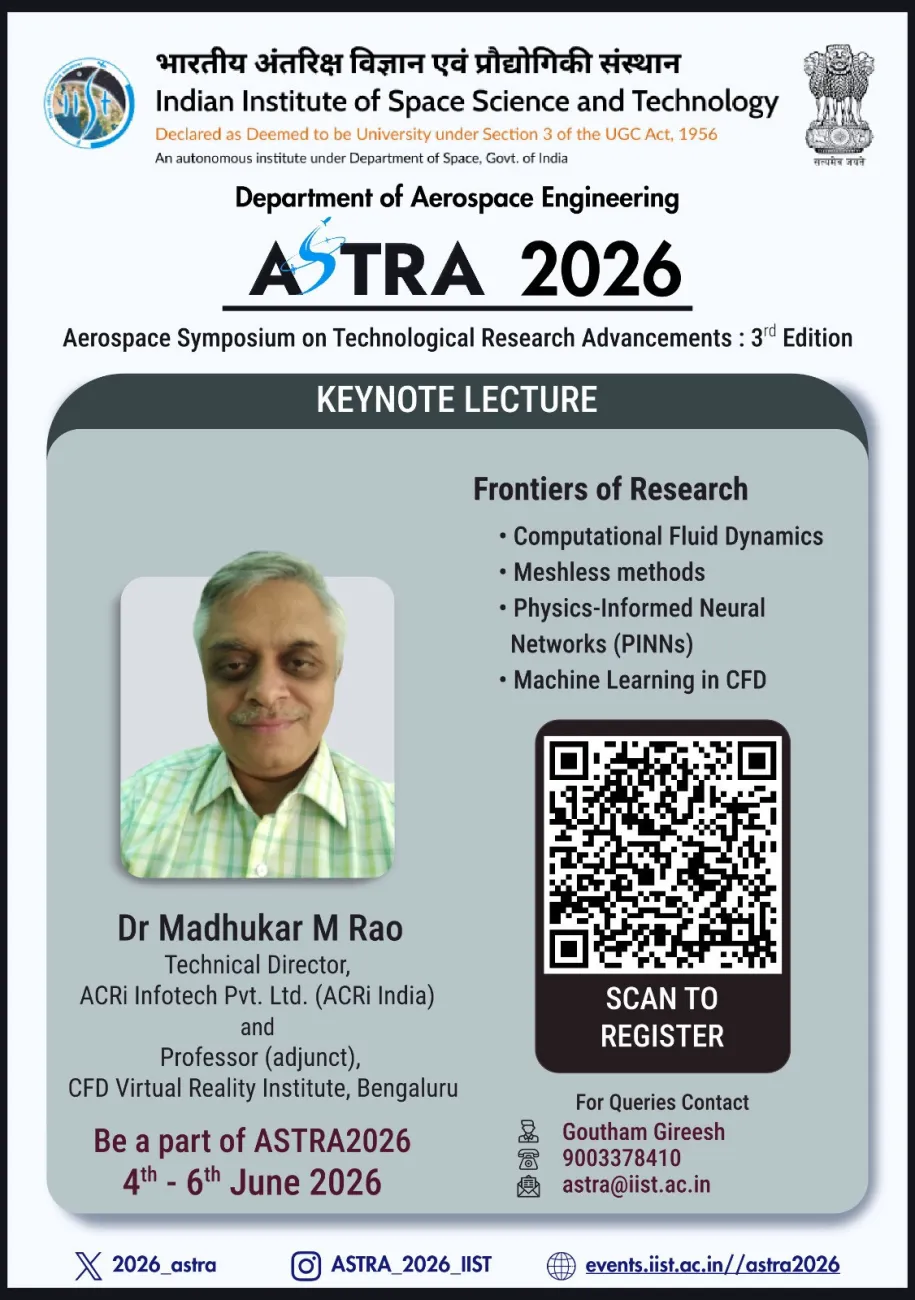
- Dr Madhukar Rao
Technical Director
ACRi Infotech Pvt. Ltd. (ACRi India)
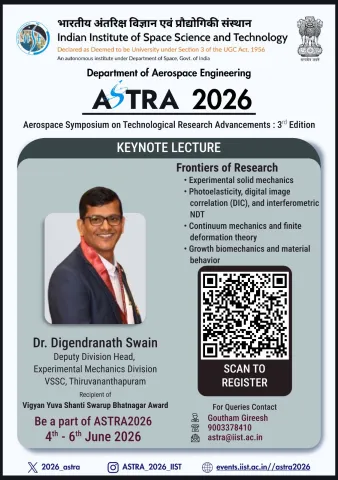
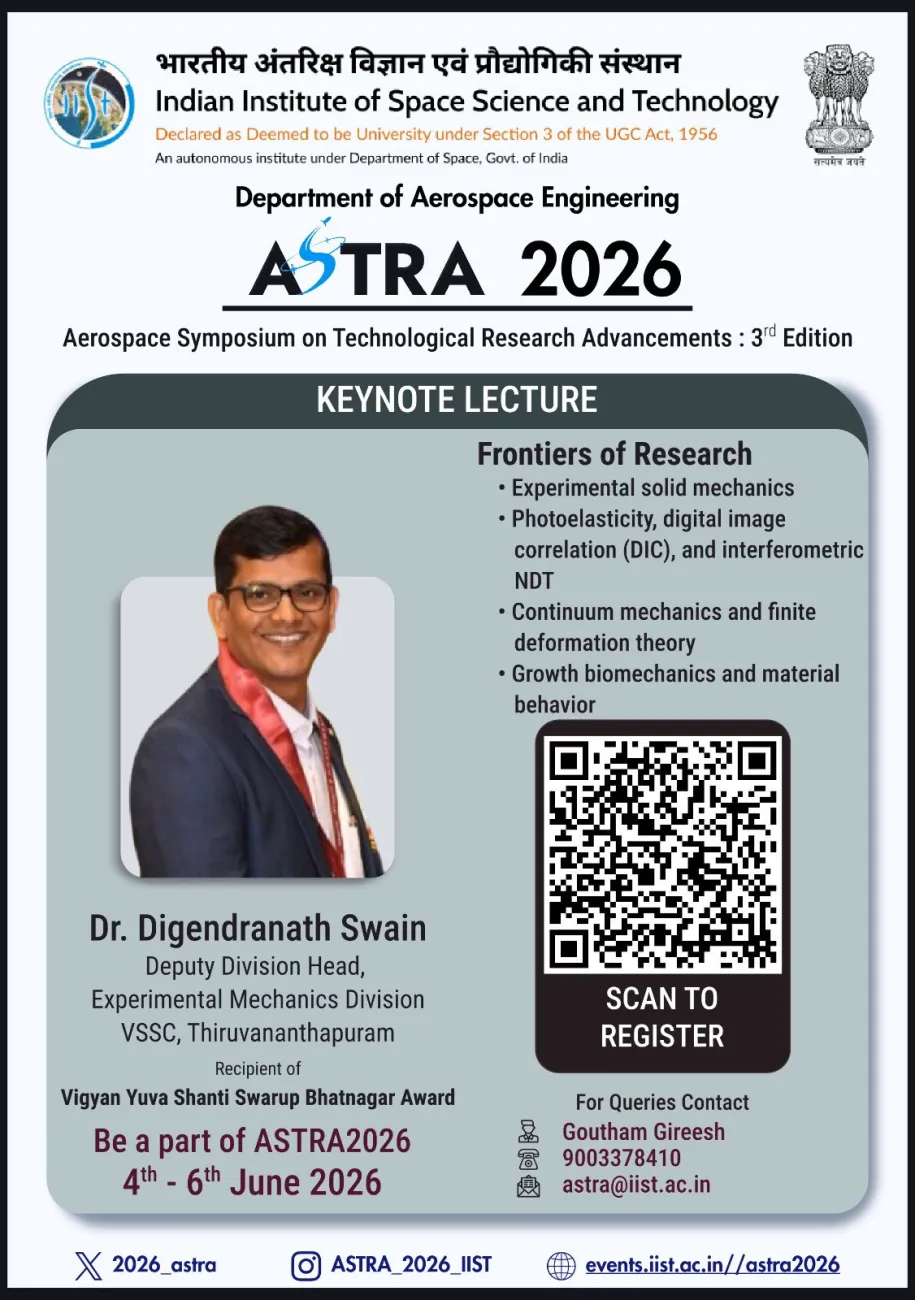
- Dr. Digendranath Swain
Deputy Division Head, Experimental Mechanics Division, VSSC
- Dr. Sasikumar
Scientist at VSSC/ ISRO
Website Url
Event Details
-
Mode:In-Person