


Detecting Adulterated Milk: A Lab-to-Market Device
Milk adulteration — adding, removing, or substituting authentic milk components for profit —remains a serious public health risk, with water, urea, synthetic milk, antimicrobial residues, and industrial chemicals such as melamine and formalin linked to harms ranging from indigestion and kidney damage to cancer and antimicrobial resistance. The talk traces low-cost electrical and electrochemical sensing methods that detect water dilution, synthetic milk, bacterial contamination and mastitis from the electrical signature of a milk sample. It then follows the engineering path from those lab-validated principles to a compact, battery-powered handheld device that analyses a sample in about a minute. Finally, it covers the device's validation against conventional methods and its route to commercialization
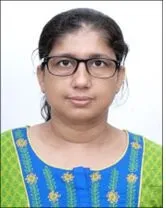
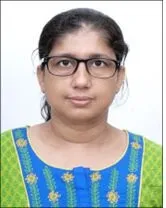
Prof. Karabi Biswas (Member, IEEE) received the B.Tech. Degree from IIT Kharagpur, Kharagpur, India, in 1992, the M.Tech. degree from Jadavpur University, Kolkata, India, in 2000, and the Ph.D. degree from IIT Kharagpur, in 2007. She is currently a Professor with the Department of Electrical Engineering, IIT Kharagpur. Her research interests include the design of sensors, the development of instrumentation systems, and the development of fractional-order elements.
Photo Gallery
Venue
Event Details
-
Mode:In-Person