


IIST Systems and Networks Lab (IIST SysNet Lab)
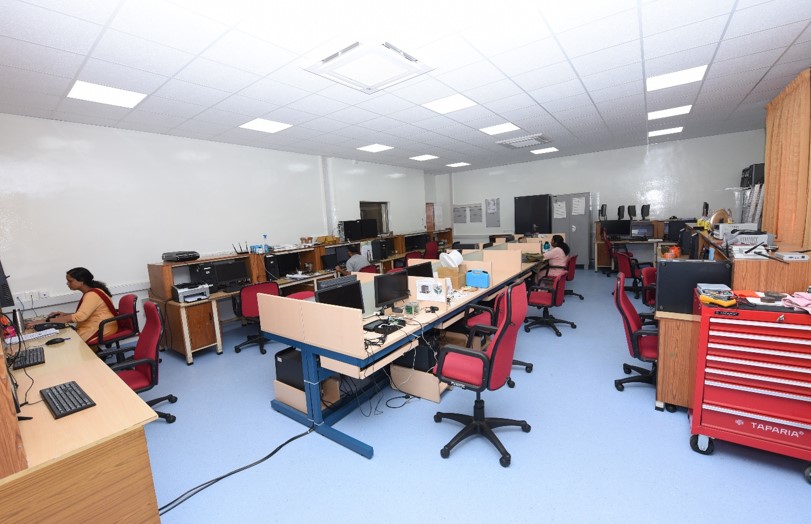
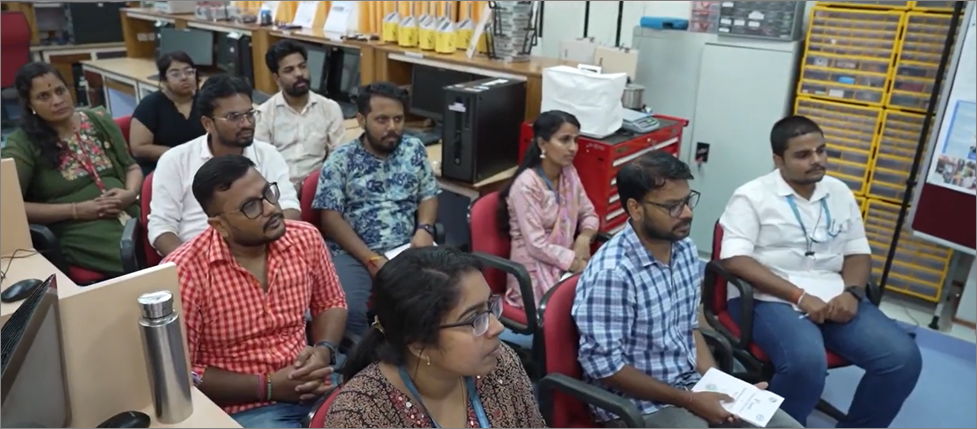
The IIST Systems and Networks Lab (IIST SysNet Lab) at the Department of Avionics, Indian Institute of Space Science and Technology, is a research laboratory led by Prof. BS Manoj, specializing in networked systems and next-generation computer networks. The lab’s key research areas include Satellite Networks, Satellite Edge Computing (SEC), 5G/6G satellite integration, 5G/6G testbed development, CubeSat development, Space-Based Hosting Service (SBHS), Mobile Ad-hoc Networks (MANETs), Wireless Mesh Networks (WMNs), Wireless Sensor Networks (WSNs), Delay Tolerant Networks (DTNs), Software Defined Networks (SDNs), Internet of Things (IoT), Quantum Computing, Brain-Computer Interface (BCI), Complex Networks, and Graph Signal Processing.
Advanced Satellite Networks Research
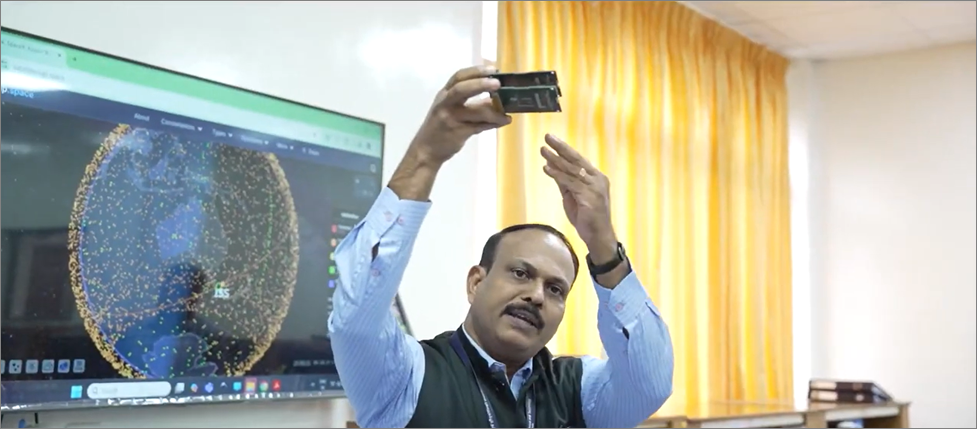
IIST SysNet Lab pioneers many advanced in next generation satellite networks. One example is the development of Space-Based Hosting Service (SBHS). Theoretical models, simulation studies, and lab-scale hardware and software testbed were developed. The SBHS testbeds provides a platform for deploying and testing databases on satellite and high-altitude balloon platforms. These enable researchers to explore novel architectures and communication protocols for space-based hosting services and edge computing services.
5G/6G Research and Development
IIST SysNet Lab has been in the forefront of conducting research on mobility management and intelligent handover mechanisms in 5G and 6G networks to support seamless connectivity for mobile users.
The lab developed a 5G testbed based on the SrSRAN and Open5GS framework and focuses on the development and integration of 5G/6G technologies with NTN. Further, the testbed enables experimentation with low-latency communication and testing of satellite-terrestrial network integration, handover, and edge computing capabilities. The testbed integrates key components such as the 5G Core, gNodeB, and User Equipment using open-source platforms. It provides a cost-effective and portable environment for studying 5G network functions, connectivity, and different deployment scenarios. Open5GS serves as the core network, which is an advanced open-source project designed for implementing and managing New Radio (NR) and Long-Term Evolution (LTE) mobile networks. srsRAN developed by Software Radio Systems, is an open-source software suite for 4G and 5G radio access networks, to implement the RAN. The USRP X310, a high-performance and scalable SDR platform, functions as the radio unit to develop next-generation wireless technologies.
The lab also conducts research on mobile edge computing. Edge-AI framework using Multi-access Edge Computing (MEC) and split computing to reduce communication latency and computational overhead are under active research. In this approach, an AI model is divided into multiple segments, with the initial layers executed locally at the User Equipment (UE) and the remaining layers processed at the MEC server. The experimental setup can be used to evaluate end-to-end inference latency, local processing time, transmission delay, MEC processing time, and overall task execution performance under 5G/6G network and computational conditions.
Indian Brain-Computer Interface (BCI) Research
IIST SysNet lab has been the pioneer in Indian Language BRI research. The lab has developed more than a dozen BCI datasets for various Indian languages using OpenBCI hardware. These datasets are used for research on multilingual BCI systems and for developing machine learning and deep learning algorithms to recognize and process brain signals associated with neuromuscular disorders. The lab has developed early stage BCI solutions for Malayalam, Telugu, Odiya, and Marathi languages.

L202, Avionics Block